











When Downtime Isn't an Option, Access Matters
Common Use Cases
Transportation operations depend on the right access equipment, material handling, and storage: truck access platforms, truck and dock ladders, wheel chocks, tuggers, drum handling, and parts storage for fleet maintenance, freight terminals, bus depots, yards, and last-mile hubs.
Fleet Maintenance Shops
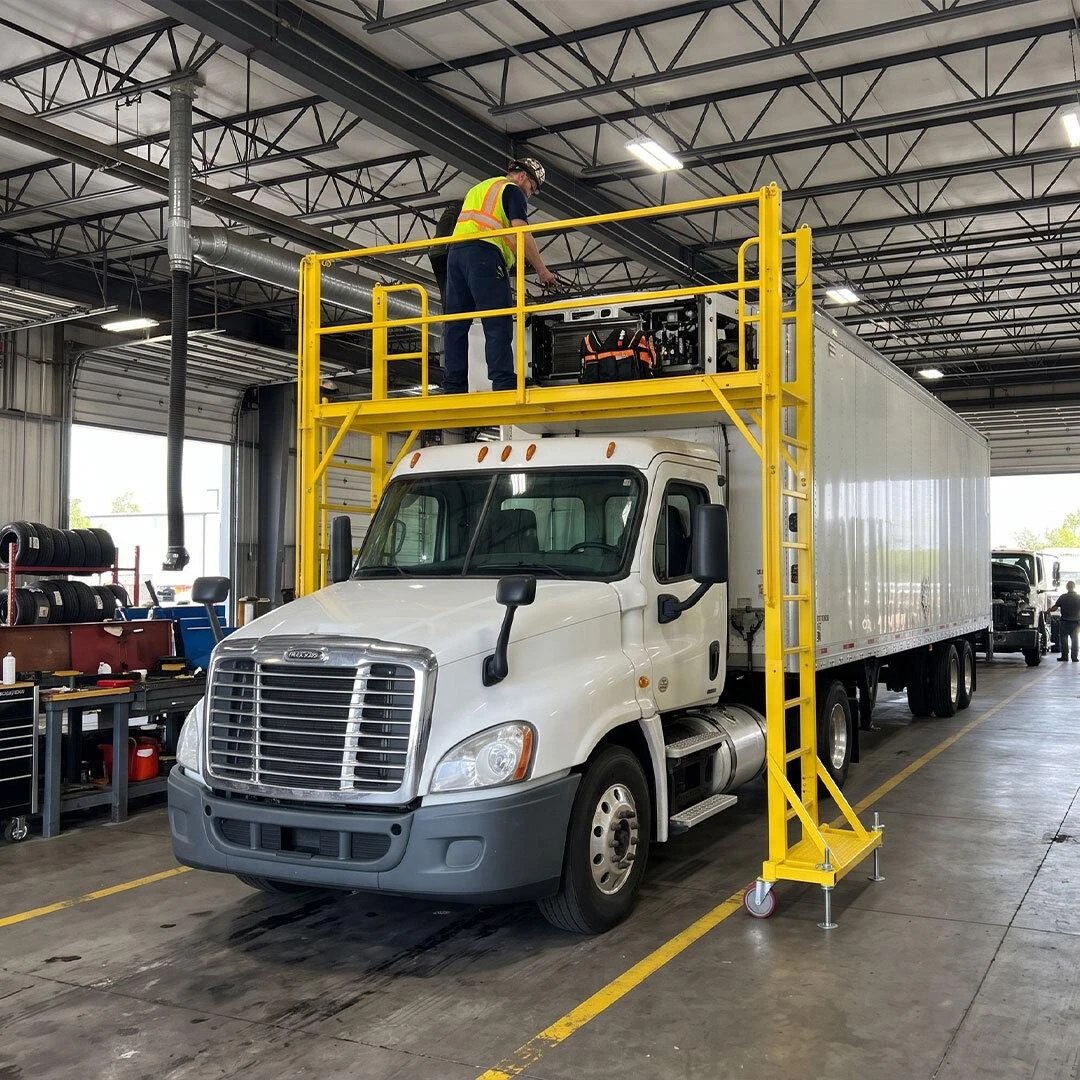
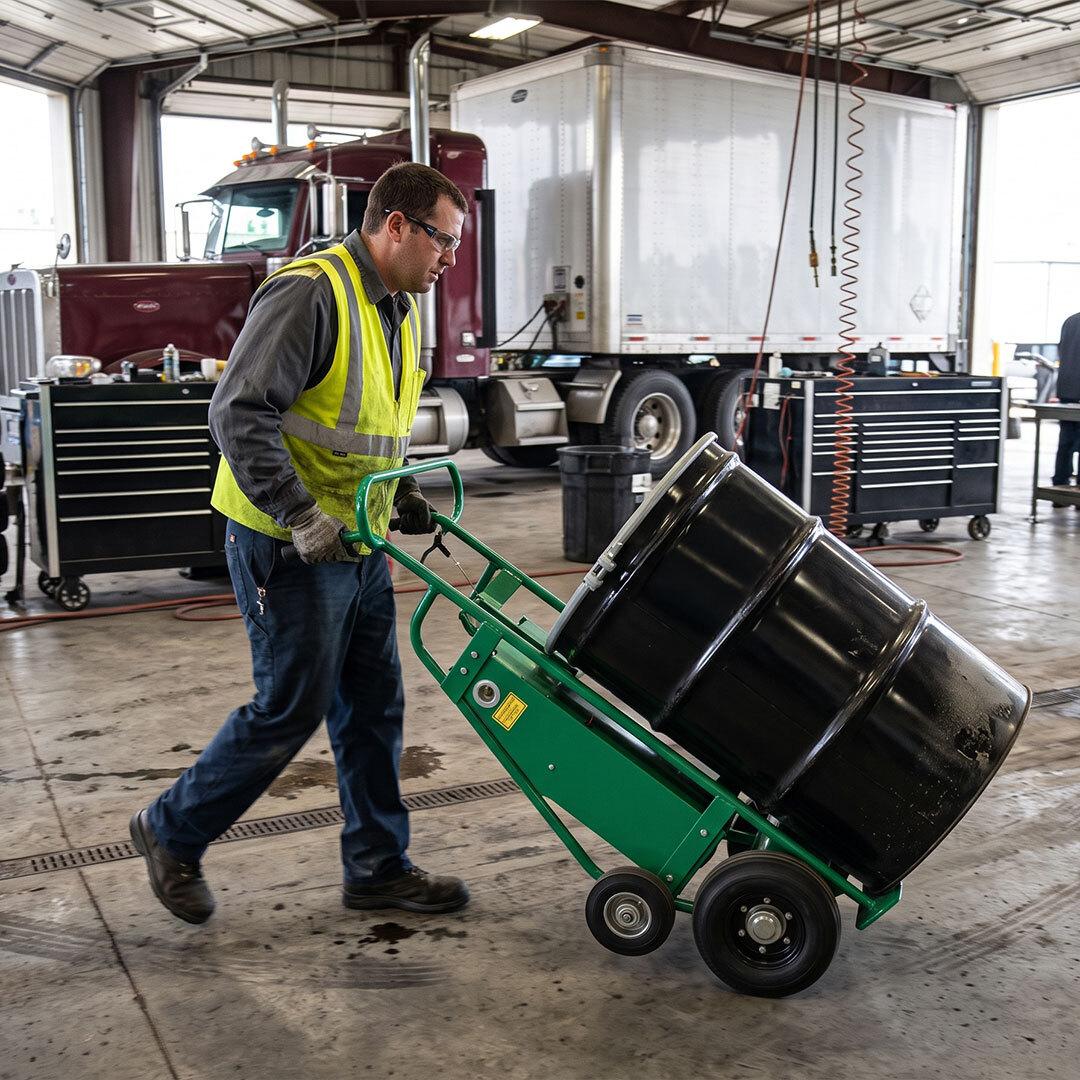
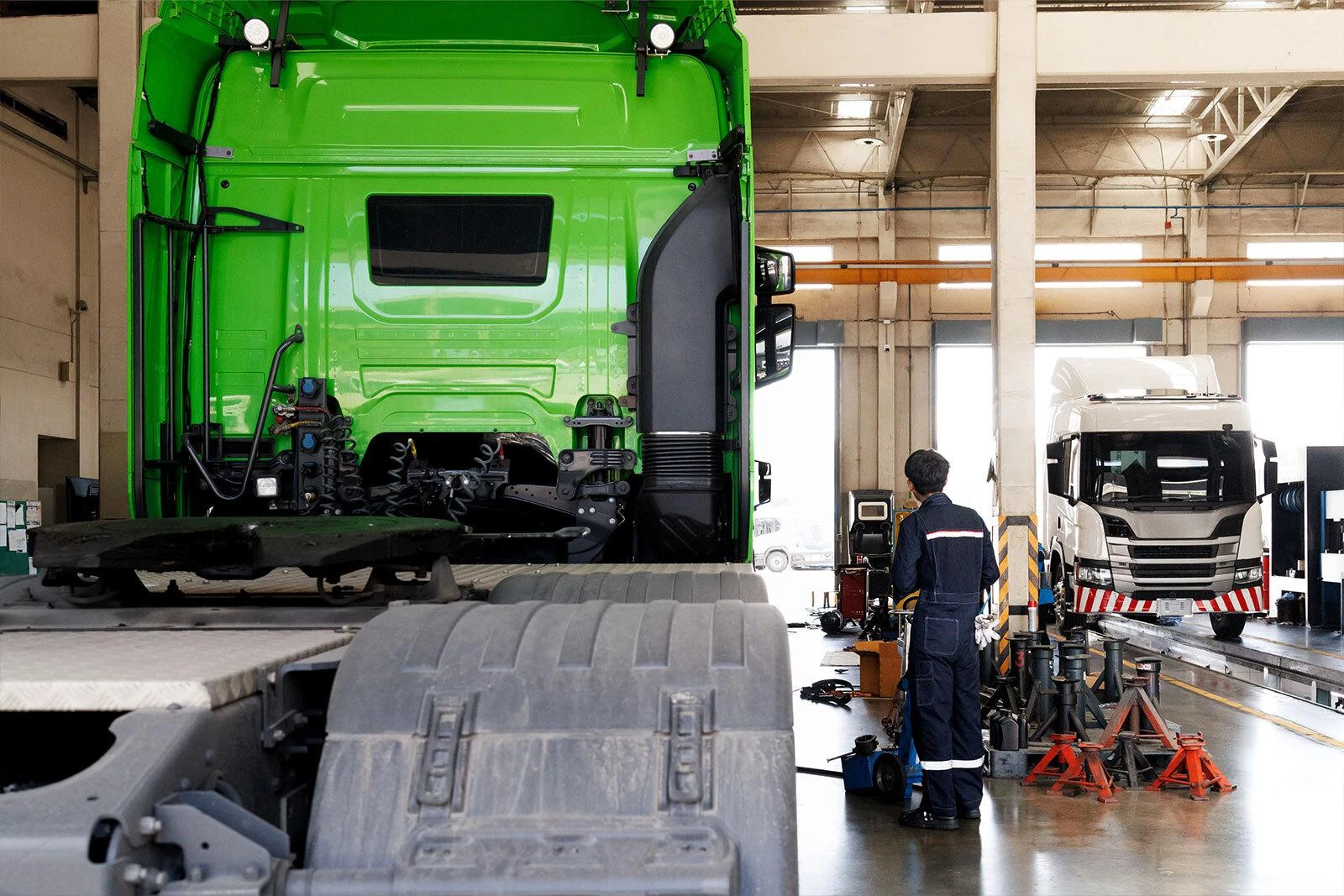
Truck and trailer repair bays run on safe access, fast fluid handling, and parts that are easy to find. Rolling work platforms give technicians fall protection at refrigeration units and roof-mounted equipment, drum trucks move 55-gallon oil and coolant drums without tipping them by hand, and mobile aisle shelving fits a crowded parts room into less floor space.
Freight Terminals and Cross-Dock Yards
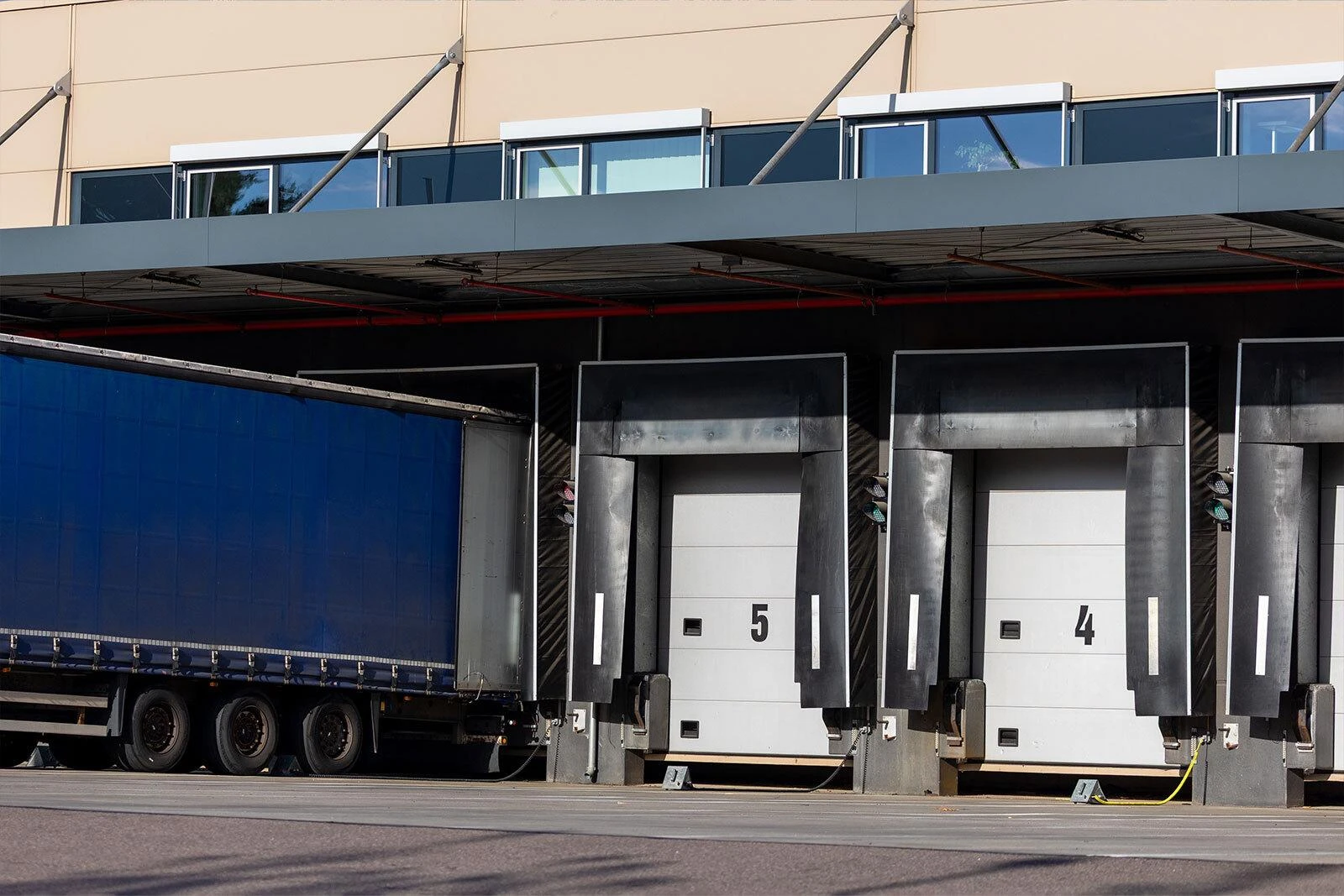
At LTL freight terminals and cross-dock yards, trailers turn through dock doors all day, and every one has to be chocked, climbed, and cleared on schedule. Mobile wheel chocks keep trucks from rolling while lift trucks board them, truck and dock access ladders reach trailer decks without a fixed dock, and electric tuggers pull cart trains across the terminal floor.
Transit and Bus Depots
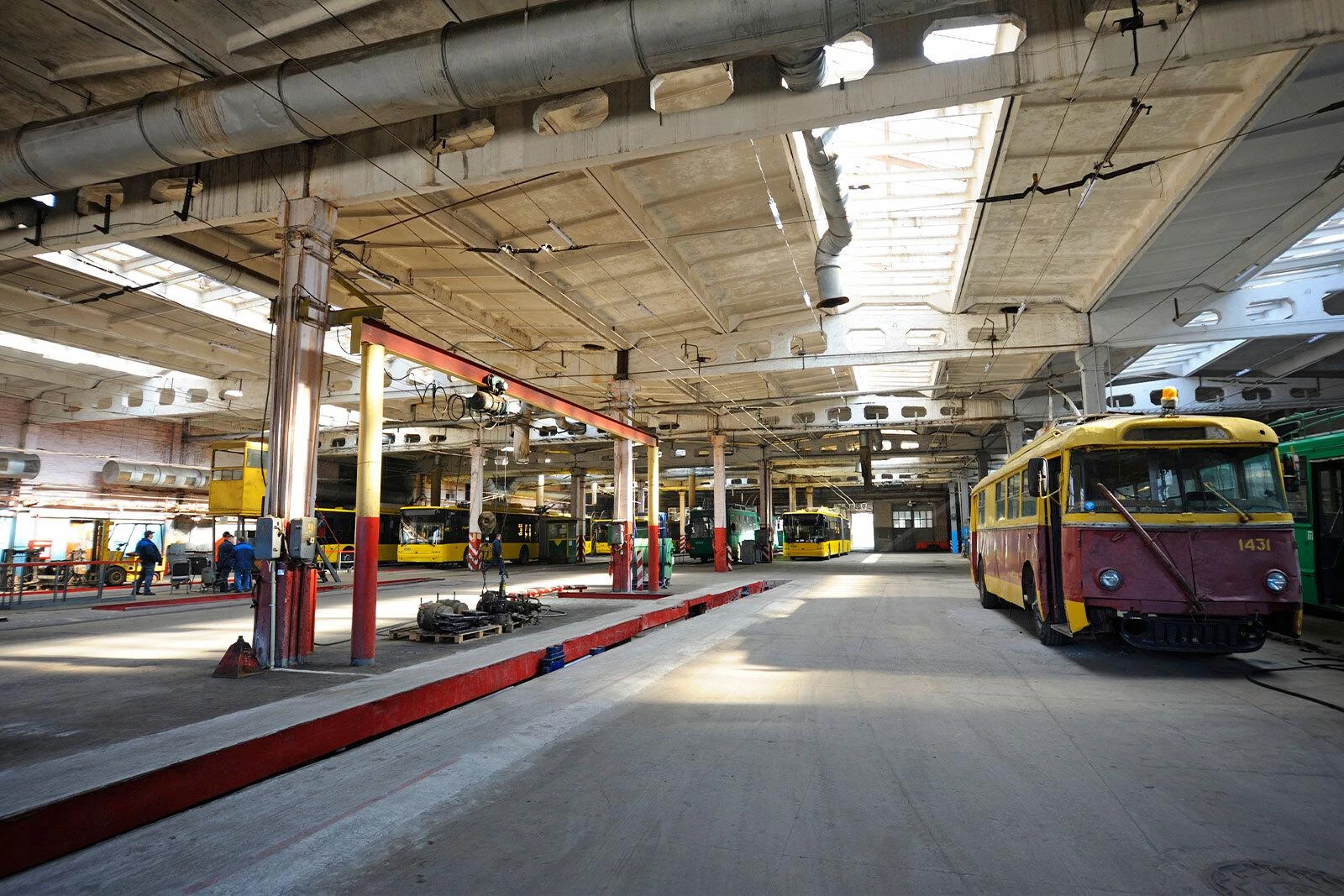
Transit and bus depots service heating, cooling, and battery equipment mounted on the roof, which means working well above the shop floor. Custom-engineered bus maintenance platforms are built to the dimensions of each bus model and service bay, giving technicians stable, guarded access for roof inspections and repairs.
Yards and Intermodal Terminals
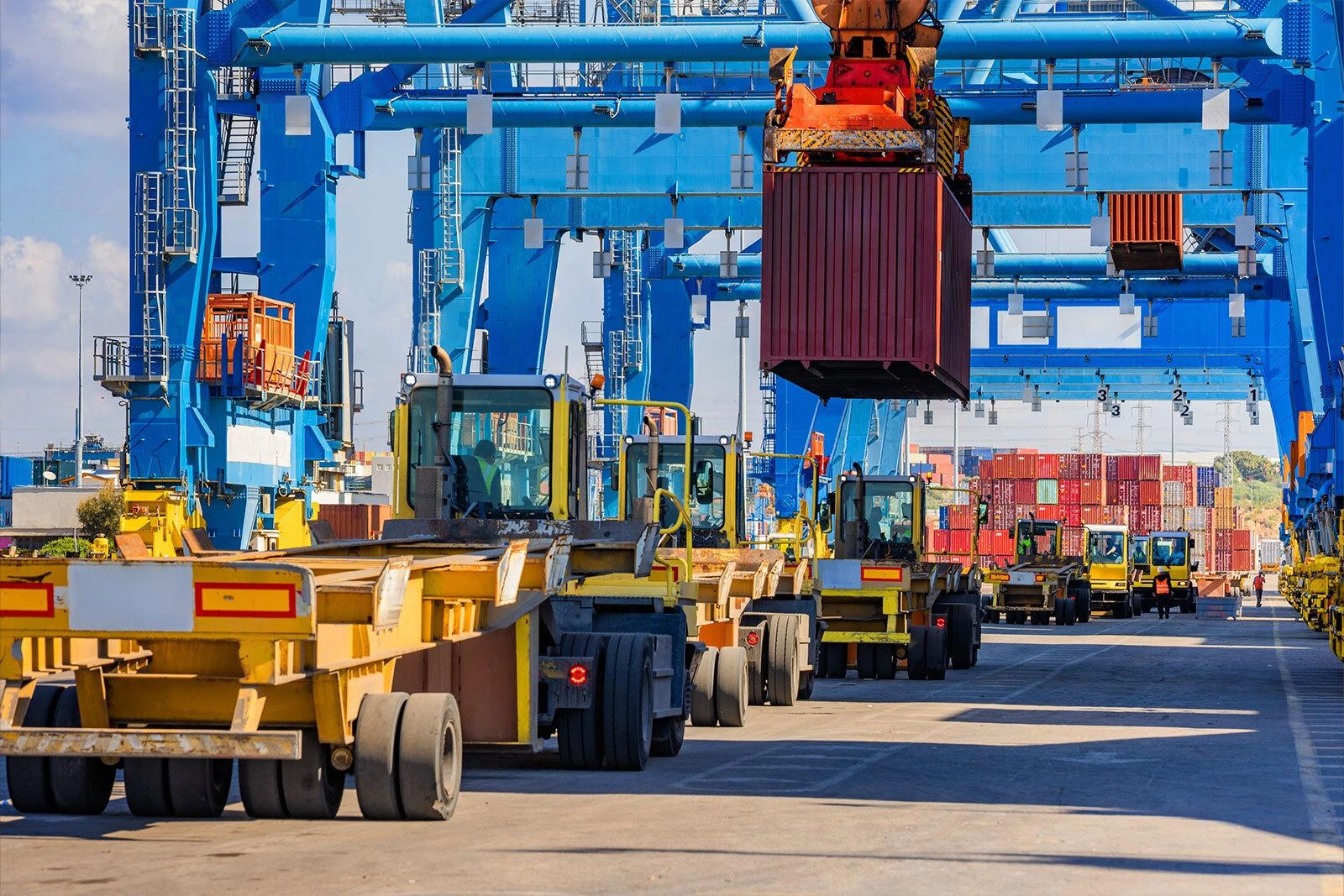
Intermodal and truck yards leave chassis, containers, and trailers outdoors in every kind of weather, and crews climb on and around them all shift. Rolling access ladders with serrated, self-draining treads and heavy-duty mobile wheel chocks stand up to rain, snow, and constant repositioning across the yard.
Parcel and Last-Mile Delivery Hubs
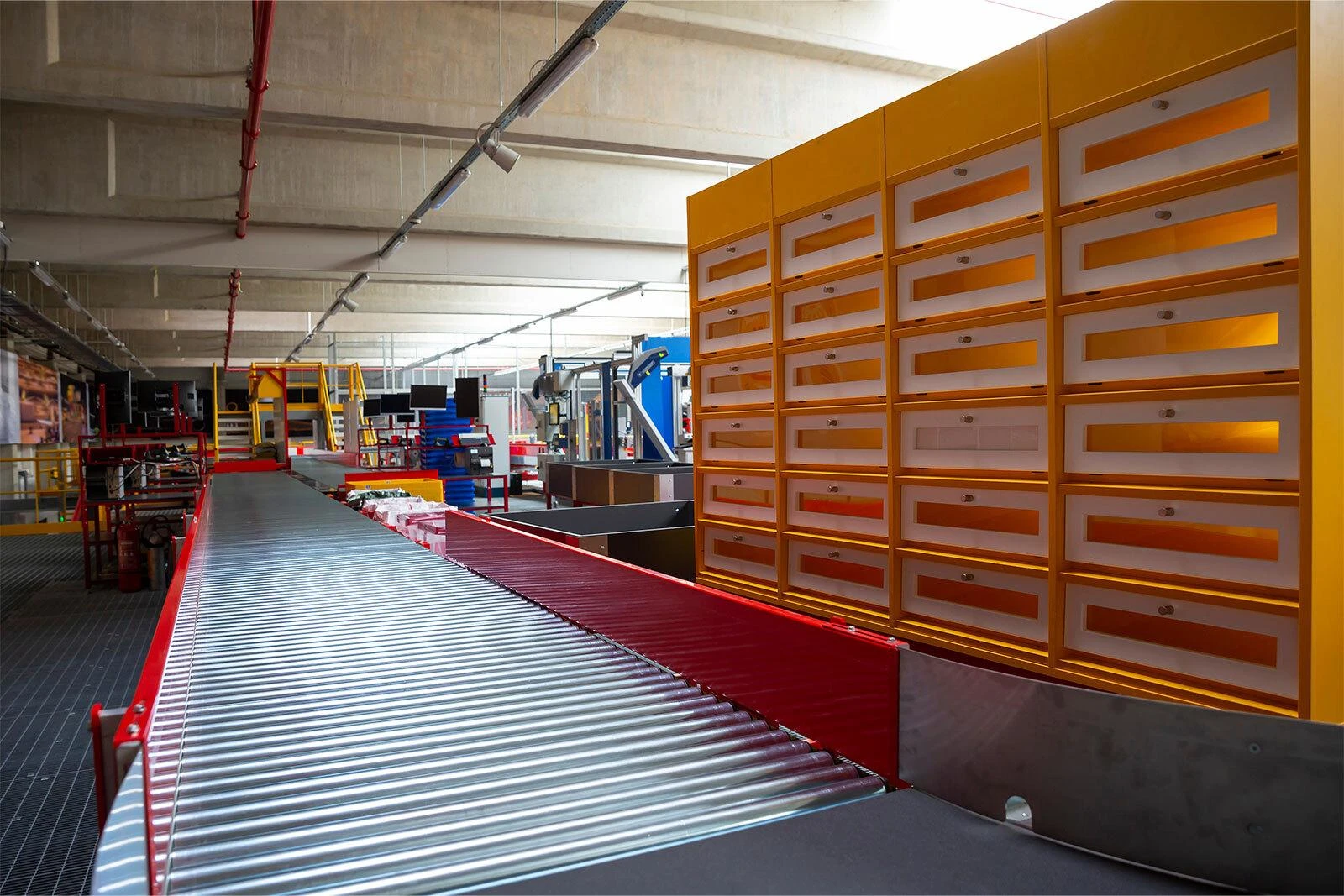
Parcel hubs run on tight dock windows, and last-mile delivery sites often have no dock at all. A portable loading dock bridges the gap between ground level and the truck bed, while ball transfer tables and powered carts move packages and totes without lifting.
Trusted Partners






Built for Transportation and Fleet Operations
What fleet, terminal, and depot operators gain, and the equipment behind it
Safety
Transportation and warehousing injury rates run nearly double the private industry average, and the right access and handling equipment goes straight at the falls, rollaways, and strains behind them.
The Bureau of Labor Statistics reports a total recordable injury and illness rate of 4.4 cases per 100 full-time workers for transportation and warehousing in 2024, compared with 2.3 across all private industry. Truck and dock access ladders give crews a safe way onto trailer decks, rolling work platforms provide fall protection at refrigeration units, mobile wheel chocks help keep trucks from rolling during loading, and electric tuggers take the pushing and pulling out of cart moves.
Compliance
Fleet shops and freight terminals answer to OSHA and FMCSA at the same time. Equipment built to recognized standards keeps both audits simple.
OSHA's general industry rules cover ladders (29 CFR 1910.23), fall protection on walking-working surfaces (1910.28), and powered industrial trucks, including wheel chocks (1910.178). FMCSA's 49 CFR Part 396 requires carriers to systematically inspect, repair, and maintain every vehicle and keep those records for one year, plus six months after a vehicle leaves the fleet. Ladders and platforms built to OSHA and ANSI standards give technicians a compliant way to do the inspections that Part 396 demands.
View Compliant EquipmentUptime
Every hour a truck waits on access, parts, or a lift is an hour it is not earning. Faster shop work gets units back on the road.
Industry estimates put unplanned downtime at 8.7 days per vehicle per year, at $448 to $760 for each day a vehicle is down. Rolling truck maintenance platforms give technicians stable access to roof-mounted and refrigeration equipment, mobile aisle shelving puts the right part within reach, and drum trucks keep oil and coolant changes moving, so less shop time is spent waiting and improvising.
Throughput
Dock doors run on schedule. Tuggers, powered pallet jacks, and portable docks move more freight with fewer people.
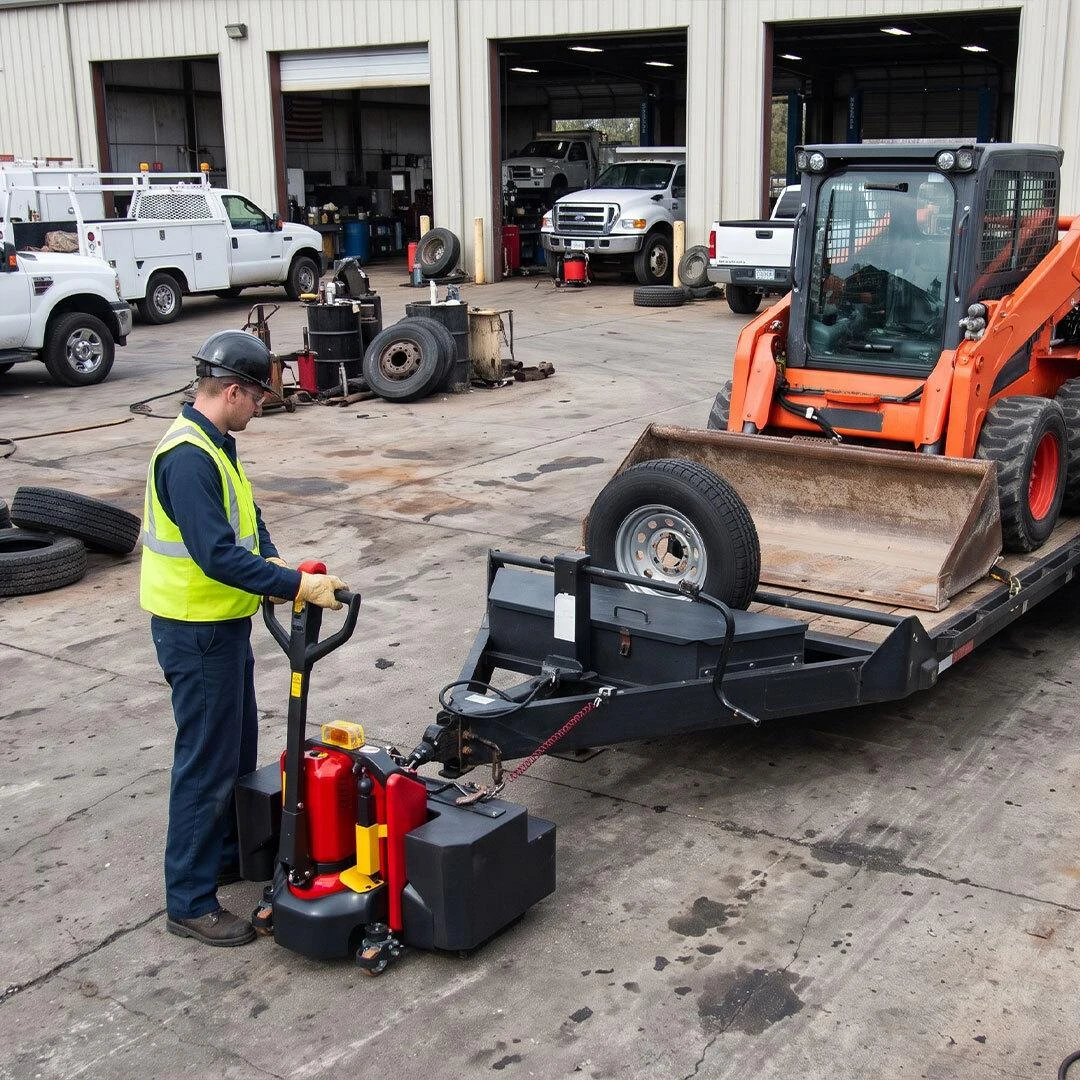
A walk-behind electric tugger can pull a cart train of 3,500 to 5,000 lbs with very little operator effort, depending on the caster size of the carts. Powered pallet jacks and electric stackers move pallets from trailer to staging, and a rough terrain portable loading dock turns a curb, yard, or parking lot into a loading position where no dock exists. Across a shift, that adds up to faster trailer turns.
View Material HandlingDurability
Yards, docks, and truck tops are outdoors. Equipment has to hold up to rain, snow, and constant repositioning.
American-made truck and dock access ladders use serrated grating treads that provide slip resistance and water drainage, on a powder-coated steel frame that resists scratching, water, chemical corrosion, and weathering. Mobile wheel chocks use all-steel construction built to stand up to repeated abuse, so equipment stays in service across seasons instead of being replaced.
Customization
When a standard unit does not fit the bus, the bay, or the yard, engineered access solutions are built around the vehicle.
The Engineered Access Solutions (EAS) team designs and builds custom truck, trailer, and bus maintenance platforms, crossovers, and multi-level access systems around your vehicle dimensions and service bay layout. Every build is designed to meet OSHA requirements and delivered ready to install.
See Custom SolutionsServices & Software

Preventative maintenance, asset tracking, and repair for the powered equipment that keeps your terminals, yards, and shops moving, from one nationwide service provider.
Transportation operations run around the clock across many locations, which makes coordinating local vendors slow and keeping service records consistent a constant chore. DOC Services brings 35+ years of equipment service experience and technicians who average 18 years in the field to maintain material handling equipment such as electric pallet jacks, scissor lifts, electric lifts, and conveyors, with a 24/7 call center and one service program across every terminal and depot.
Learn About DOC ServicesPreventative Maintenance Programs
Custom programs built from OEM guidelines, industry regulations, and your workforce needs, with service frequency set by location to balance budget and uptime.
Asset Tracking
Make, model, serial number, install date, warranty period, age, hours, and location tracked for every asset with QR code or bar code tagging. Over 90,000 pieces of equipment tagged to date.
24/7 Call Center
Round-the-clock support for terminals and depots that never close, with technicians serving partners across the US and Canada.
Self-Performing Technicians
Manufacturer-trained technicians roll out nationwide with general parts stock, and integration with industry CMMS platforms supports an average 72-hour turnaround.

Real-time visibility, access control, and inspection tracking for the motorized equipment working your docks, yards, and shop floors, across every terminal and depot.
BallyQ is a Safety Intelligence Platform that gives terminal managers, fleet shop supervisors, and safety officers one dashboard for their motorized and mobile equipment, from forklifts and carts to lifts and platforms. IoT sensors capture cycle counts and runtime hours, access can be limited to credentialed operators, and Inspect adds digital inspection checklists, repair dispatch, and a complete audit trail with no hardware required.
Learn About BallyQReal-Time Monitoring
Cycle counts, runtime hours, and operational data from every connected machine on one live dashboard, with instant alerts for faults and safety threshold breaches.
Access Control
Restrict equipment to credentialed operators provisioned by training certification, with every access event logged and auditable.
Inspection and Repair Tracking
Digital inspection checklists, repair dispatch and logging, and a complete audit trail, with no hardware required.
Multi-Location Dashboard
One view across every terminal, yard, and depot, available on desktop, tablet, or phone.
Common Use Cases
Hyperscale Campus Operations
Colocation Rack Maintenance
Enterprise Server Room Access
UPS & Battery Infrastructure
Services & Software
Preventive maintenance, compliance inspections, and emergency repair for your full Ballymore equipment fleet — covered by a single nationwide service provider.
For data center operators managing equipment across multiple facilities, DOC Services eliminates the complexity of coordinating local vendors in every market. One service agreement, one point of contact, consistent documentation across every site.
Scheduled PM Programs
Preventive maintenance on defined intervals for ladders, lifts, and platforms.
Compliance Documents
Inspection records and service reports suitable for OSHA audits and internal reviews.
Nationwide Coverage
Technician network covering all major US data center markets.
Single Point of Contact
One service agreement for multi-site operators across regions.
Asset Tracking
Compliance Reporting
Multi-Site Dashboard
CMMS Integration
Real-time visibility into equipment status, inspection records, compliance documentation, and safety program performance across all sites and assets.
BallyQ gives data center facilities teams and EHS managers a single dashboard to track their access equipment fleet, stay ahead of inspection schedules, and generate audit-ready compliance reports without manual recordkeeping.
Frequently Asked Questions
Common questions about access equipment, material handling, and safety compliance for fleet maintenance shops, freight terminals, bus depots, and yards.
Truck terminals and fleet maintenance shops are covered by OSHA's general industry standards in 29 CFR Part 1910. Ladders fall under 1910.23, which requires inspection before initial use in each work shift, tagging defective ladders "Dangerous: Do Not Use" and removing them from service, and climbing while facing the ladder with at least one hand on it. Mobile ladder stands and platforms are covered by 1910.23(e), the duty to provide fall protection at unprotected edges four feet or more above a lower level is in 1910.28, and powered pallet jacks, stackers, and tuggers are generally governed by the powered industrial truck standard, 1910.178. Ballymore truck and dock access ladders and rolling work platforms are built to meet applicable OSHA and ANSI requirements. Visit our ladder safety and material handling safety pages for more.
Not in the same way it does for fixed work surfaces, but the hazard still has to be addressed. OSHA's general industry rule, 1910.28, requires fall protection at unprotected edges four feet or more above a lower level. However, a 1996 OSHA enforcement memorandum on rolling stock states that falls from the tops of vehicles such as tank and hopper trucks and trailers will not be cited under the walking-working surfaces subpart. The General Duty Clause can still apply when a recognized hazard has a feasible fix, particularly when the vehicle is parked inside or next to a building where fall protection can be installed. A rolling work platform gives technicians a stable, chained-off working surface at the vehicle instead of an improvised ladder setup. Confirm current requirements with your safety professional or local OSHA office.
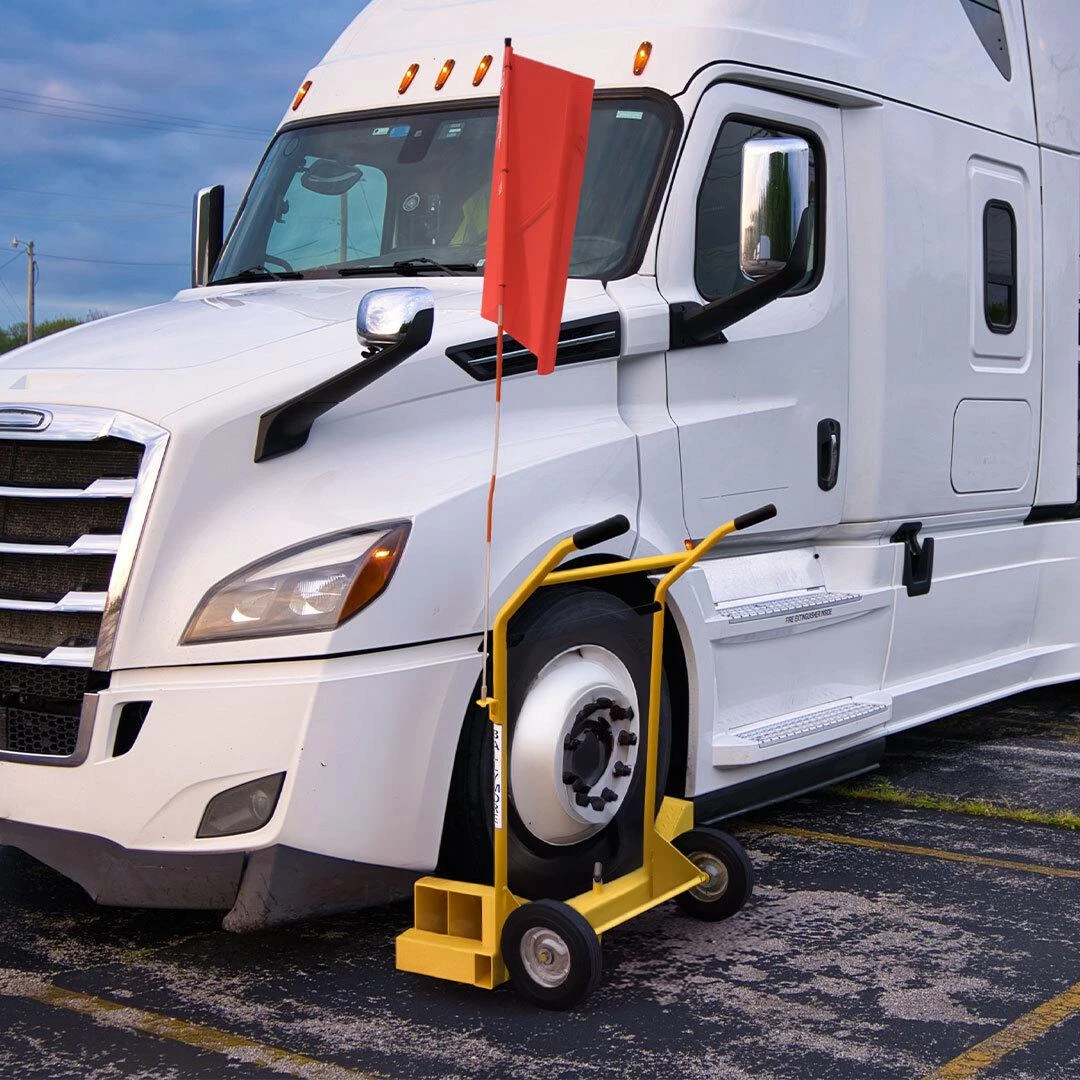
OSHA's powered industrial truck standard calls for wheel chocks, but it also recognizes equivalent methods. Section 1910.178(k)(1) requires the brakes of highway trucks to be set and wheel chocks placed under the rear wheels to prevent rolling while powered industrial trucks board them, and 1910.178(m)(7) requires brakes set and wheel blocks in place to prevent movement of trucks and trailers during loading or unloading when a trailer is not coupled to a tractor. In a 2005 letter of interpretation, OSHA said it would treat failure to use chocks as a de minimis violation, with no citation, when alternatives such as dock locks or dock monitoring systems prevent unintentional movement. Mobile chocks cover yards, maintenance bays, and docks without restraints. The Ballymore Heavy Duty Mobile Wheel Chock expands from 40 to 70 inches wide and includes a high-visibility flag.
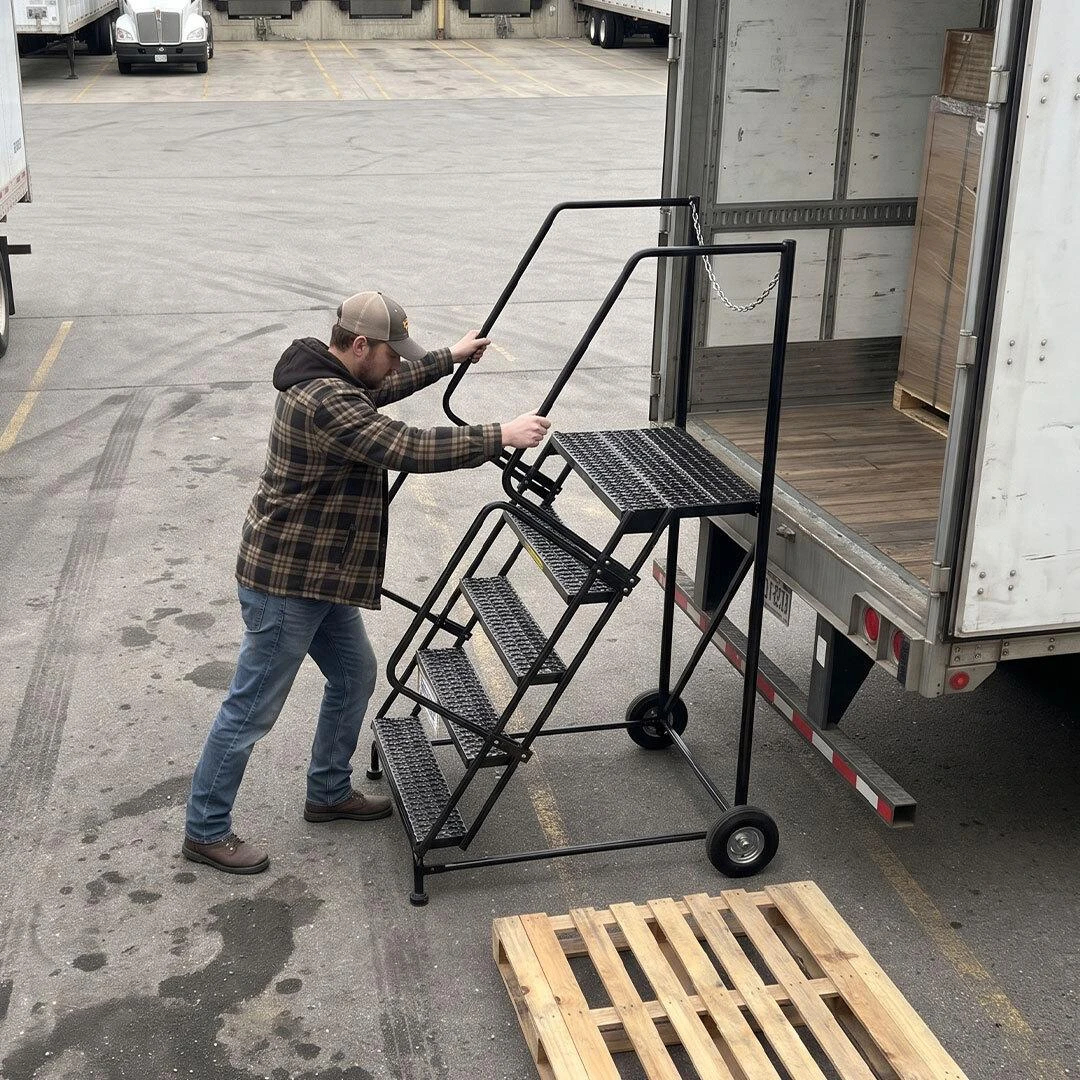
Most loading docks in North America sit 48 to 52 inches above grade, while trailer bed heights range widely, from about 30 inches to more than 60 inches, with refrigerated trucks commonly running 50 to 60 inches. Where there is no dock, crews need a stable way to climb to deck height. A truck and dock access ladder with a platform at about 50 inches, serrated treads for slip resistance, and handrails gives drivers, yard crews, and inspectors a safer option than stacked pallets. OSHA has no specific standard requiring steps or ladders to get on and off flatbed trailers, but the ladder rules in 1910.23 apply to any ladder you provide. The Ballymore Truck/Dock Access Ladder rolls on two 10 inch wheels, and a Cal/OSHA compliant version with 42 inch handrails is available.
Technicians servicing a truck-mounted refrigeration unit need a stable, guarded work platform at the height of the unit, not a stepladder. The Tri-Arc rolling work platform built for this job adjusts from 103 to 115 inches in 4-inch increments to match different truck heights, with ladder access on both sides, a 24 by 120.5 inch serrated platform for slip resistance and drainage, snap chains at every entry point and at the refrigeration unit opening, and outriggers for stability. It is designed for small to medium sized trucks, and lifting points support a bucket and pulley for raising tools and parts. For other vehicle sizes or shop layouts, the Engineered Access Solutions team can build a custom platform.
A walk-behind electric tugger is the usual answer. Instead of pushing and pulling loaded carts by hand, an operator hitches the carts to the tugger and steers with very little effort. The Lift Products Moto-Tugger LT pairs a rotating transaxle drive with a 180 degree articulating tow arm, an automatic mechanical brake, and a belly bump reversing switch for tight spaces, while the Moto-Tugger HD is built for heavier trains of 3,500 to 5,000 lbs depending on the caster size of the carts. Powered pallet jacks and tuggers are generally treated as powered industrial trucks, so operators need training and periodic evaluation under OSHA 1910.178(l).
A portable loading dock is a movable platform that lets forklifts and pallet jacks load and unload a truck at a location with no fixed dock. Common examples include remote yards, seasonal overflow lots, last-mile delivery sites, and customer locations without docks. The Ballymore RT-PLD-5K rough terrain portable loading dock is a self-propelled platform on rough terrain tires with a 59 by 75 inch deck that sits at ground level when lowered and raises up to 56 inches to meet a truck bed. It handles loads up to 5,000 lbs, so a crew can move palletized freight between the ground and the truck bed without a dock leveler or a permanent structure.
Under 49 CFR Part 396, motor carriers must systematically inspect, repair, and maintain every vehicle they control and keep the records. Maintenance records are retained for one year where the vehicle is housed or maintained, plus six months after it leaves the carrier's control (396.3). Commercial motor vehicles need a periodic inspection at least every 12 months (396.17), the inspection report is retained for 14 months (396.21), and driver vehicle inspection reports are kept for three months (396.11). Part 396 covers vehicles, not shop equipment, but the same discipline applies to the ladders, platforms, and powered equipment technicians depend on. DOC Services and BallyQ Inspect help document inspections, repairs, and service history for that equipment.
OSHA sets minimum inspection frequencies. Ladders must be inspected before initial use in each work shift and more often as necessary, and any ladder with a defect must be tagged "Dangerous: Do Not Use" and removed from service until repaired (1910.23(b)(9) and (b)(10)). Powered industrial trucks, including walk-behind pallet jacks and tuggers, must be examined before being placed in service, at least daily, and after each shift when used around the clock (1910.178(q)(7)). OSHA does not require daily truck examinations to be written, but records show your program is working. Heavy use, wet conditions, and corrosive shop environments call for more frequent checks of casters, welds, fasteners, and treads. A documented preventative maintenance program, such as the custom programs DOC Services builds around OEM guidelines and your usage, keeps those checks consistent.
Consistency across terminals is the challenge, and it comes down to one maintenance program, one set of records, and fast service at every site. DOC Services tracks make, model, serial number, install date, warranty period, age, hours, and location for every asset with QR code or bar code tagging, runs a 24/7 call center, and sends self-performing technicians nationwide with general parts stock, with CMMS integration supporting an average 72-hour turnaround. BallyQ adds a multi-location dashboard, digital inspection checklists, repair dispatch and logging, and a complete audit trail, so safety managers can see equipment status across every terminal, yard, and depot.
BallyQ is Ballymore's Safety Intelligence Platform for motorized and mobile equipment. IoT sensors capture cycle counts and runtime hours for assets such as forklifts, carts, lifts, and platforms and send them to a single dashboard that works on desktop, tablet, or phone. Access can be limited to credentialed operators, alerts flag equipment faults and unauthorized access attempts, and the Inspect option adds digital inspection checklists, repair dispatch and logging, and a complete audit trail with no hardware required. Predictive maintenance and indoor positioning are on the BallyQ roadmap.
A custom platform makes sense when standard ladders and rolling platforms cannot reach the work safely or fit the space. Common triggers include transit buses with roof-mounted heating, cooling, and battery equipment, specialty truck and trailer bodies, tight service bays where stock platforms will not fit, and walkways that need to cross conveyors, pits, or vehicles. The Engineered Access Solutions (EAS) team designs and builds custom truck, trailer, and bus maintenance platforms, crossovers, and multi-level access systems around your vehicle dimensions and bay layout, delivered ready to install and designed to meet OSHA requirements. Contact us to discuss your application.