











Why Ladder Safety Matters
Ladders ranked as the #3 most-cited OSHA standard in 2024, up from #7 just eight years ago, and fall protection remains #1 for the 14th consecutive year. Ladder-related injuries cost the U.S. an estimated $24 billion annually in lost work time, medical care, and liability expenses.
Sources: OSHA FY2024 Top 10 Most Frequently Cited Standards, BLS Census of Fatal Occupational Injuries 2023, CDC/NIOSH
Essential Rolling Ladder Safety Rules
Follow these OSHA-aligned best practices every time a rolling safety ladder is used in a warehouse, distribution center, or industrial facility.
Rolling Safety Ladders vs. A-Frame Ladders
We will be honest. A-frame ladders have their place. But for warehouses, distribution centers, and other industrial or commercial environments where a ladder is used repeatedly throughout the workday, the OSHA-compliance and safety differences between a commercial rolling ladder and an A-frame are significant.
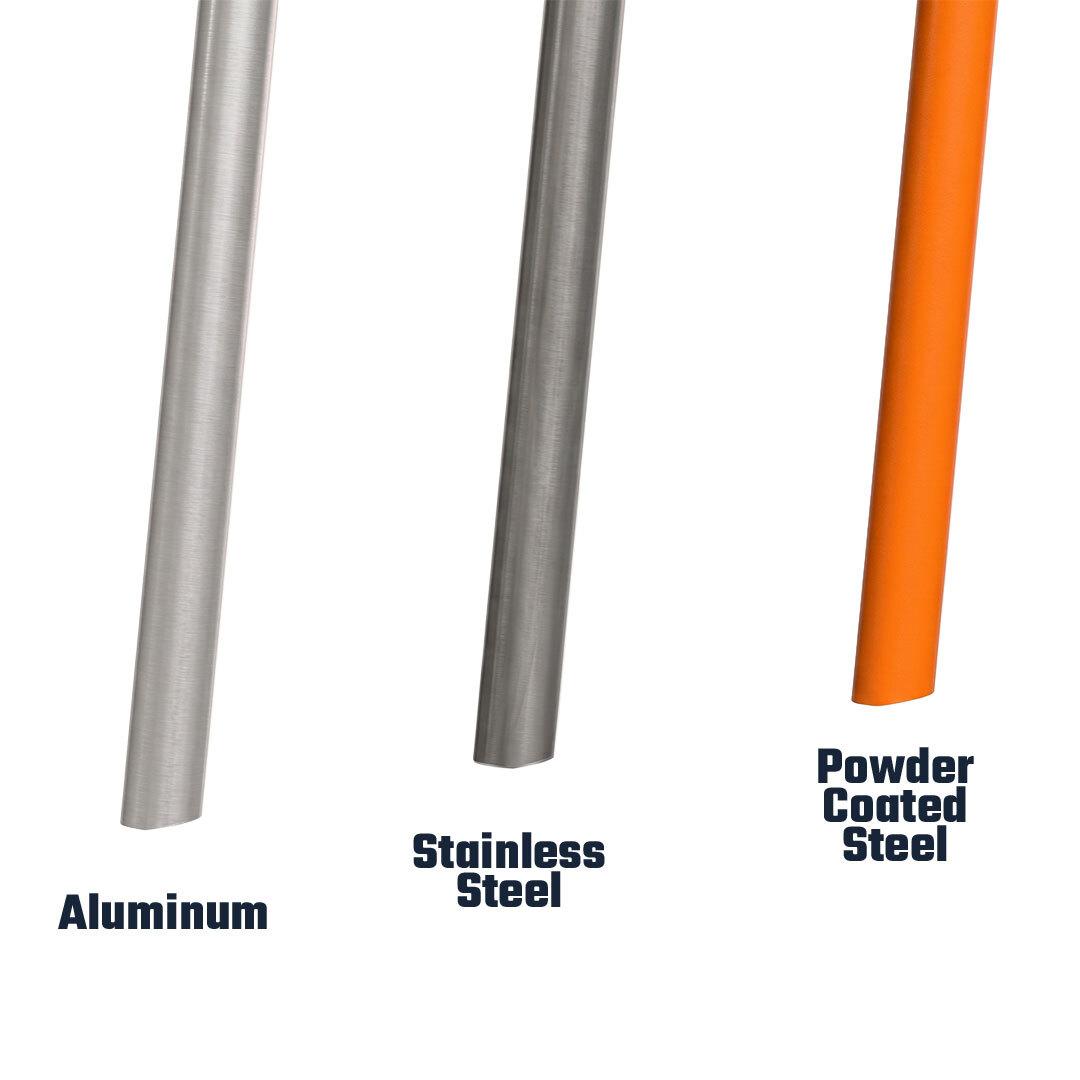
Aluminum vs. Steel vs. Stainless Steel Rolling Ladders
Once you've decided a rolling safety ladder is the right fit, the next question is material. Aluminum, steel, and stainless steel rolling ladders are all built to the same OSHA 1910.23(e) and ANSI A14.7 safety requirements, but each is suited to a different environment.
- Lightest option. Roughly a third the weight of steel, making an aluminum rolling ladder the easiest to reposition multiple times per shift.
- Naturally corrosion-resistant. No paint or powder coat to chip, so there is no coating to maintain over time.
- Lower load capacity. Aluminum rolling ladders generally support less weight than comparable steel or stainless steel models.
- Common choice for retail, light distribution, and facilities where the ladder moves often.
- Highest capacity for the investment. Heavy-gauge steel construction is the standard choice for daily, high-frequency industrial use.
- Most cost-effective. The lowest cost per pound of load capacity among the three materials.
- Powder-coated finish protects against rust in dry, indoor warehouse and manufacturing environments.
- Not recommended for washdown, high-moisture, or corrosive environments without added coating maintenance.
- Highest corrosion and chemical resistance of the three materials, with no coating to fail or flake over time.
- Ideal for washdown and corrosive environments, rated up to 450 lbs across Ballymore's stainless steel lockstep rolling ladder line.
- A common choice for food and beverage processing, pharmaceutical, and chemical plant environments where surfaces must resist regular washdown.
- Highest material cost of the three, reflecting its corrosion performance in demanding environments.
Still not sure which rolling ladder material fits your facility? Aluminum for mobility, steel for everyday industrial duty, stainless steel for washdown and sanitary environments. Our Certified Safety Professionals can help you match the right material to your specific application at no cost.
Rolling Safety Ladder Video Library
Watch Ballymore rolling safety ladders in use, featuring the lockstep braking system, hybrid configurations, and compact designs built for warehouses, distribution centers, and retail facilities.
Ladder Safety Questions Answered
Have a question not covered here? Our Certified Safety Professionals are happy to help at no cost to you.
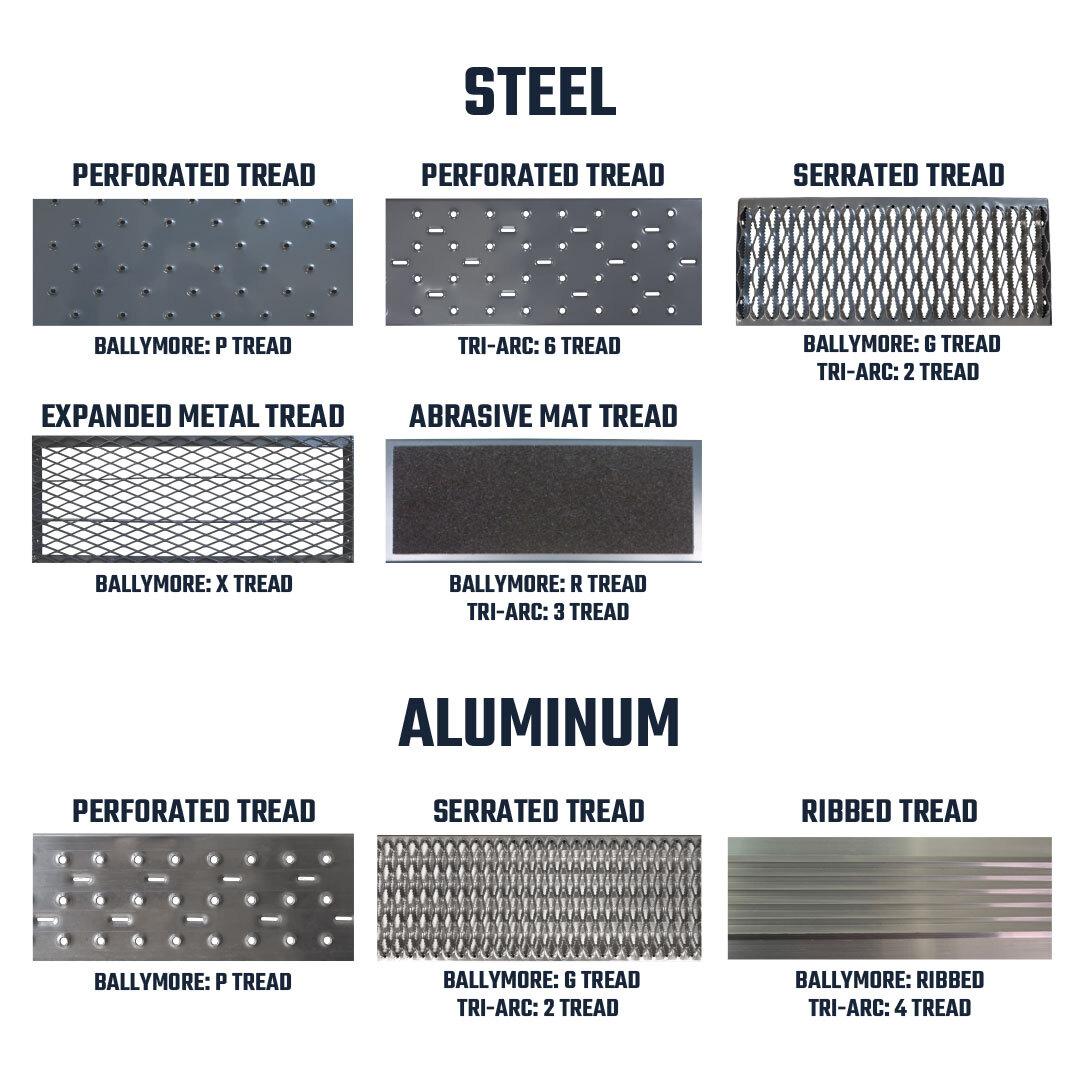
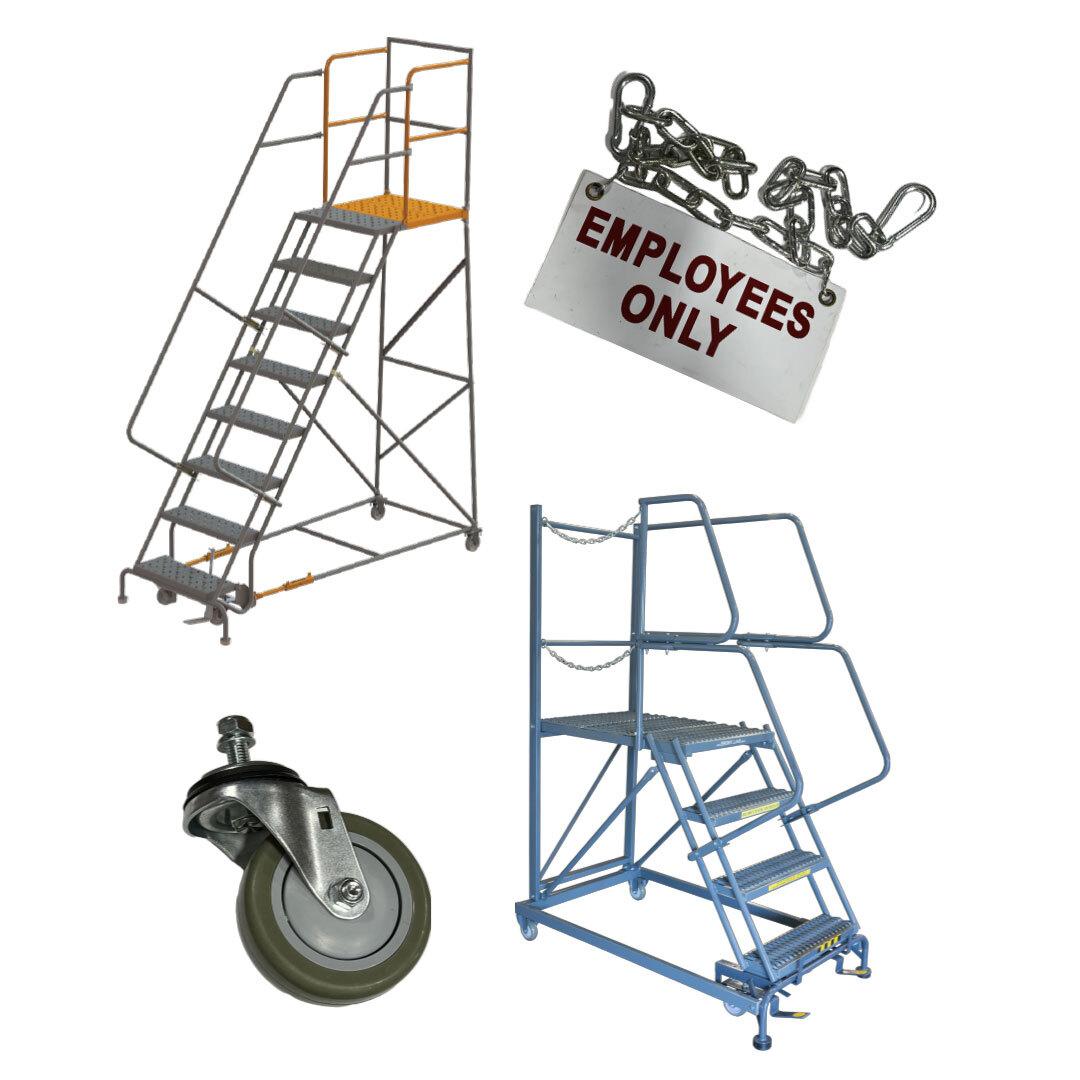
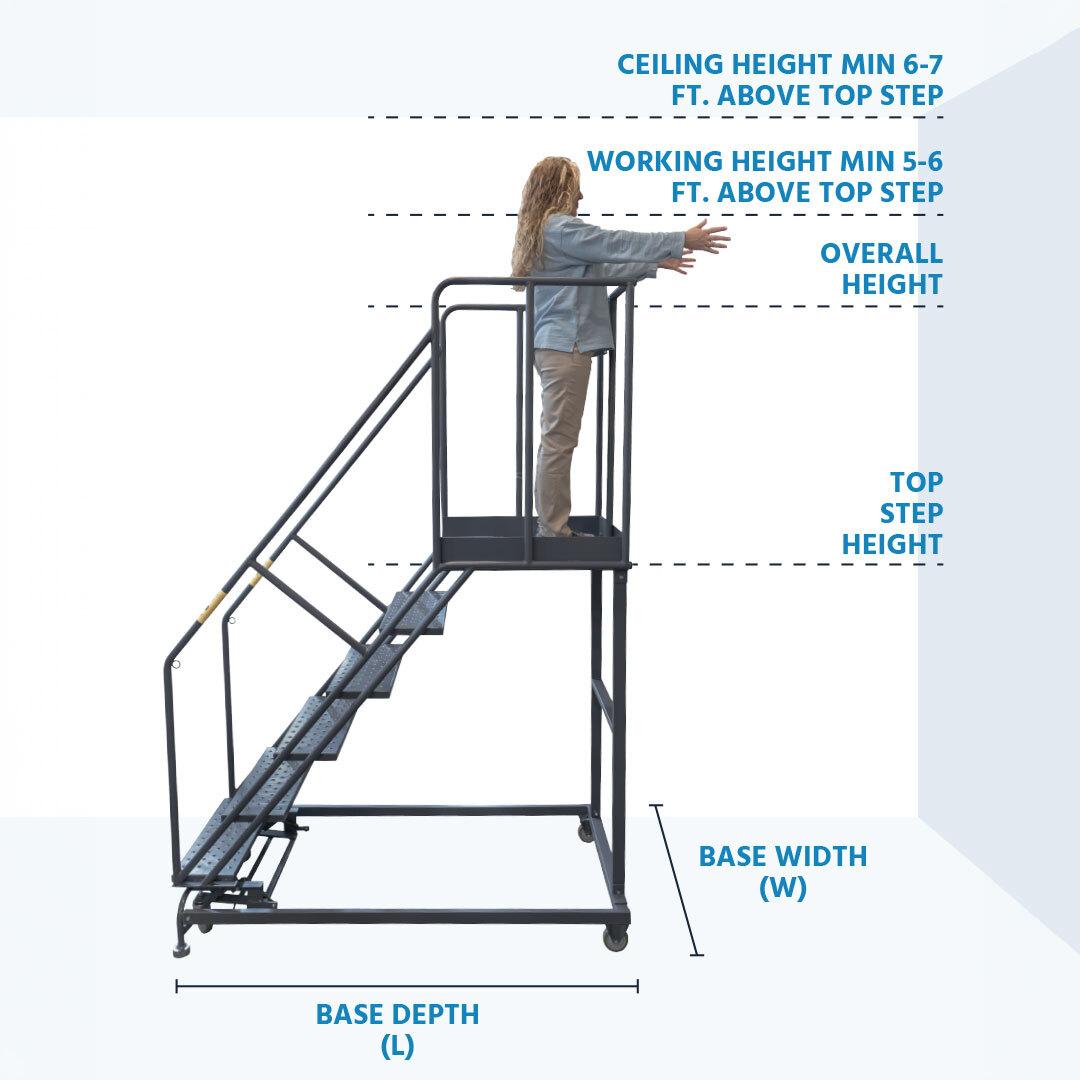
Ask Our Safety TeamChoosing the right ladder involves 7 key factors: material, tread type, specialty options, platform height, step width, aisle space, and locking mechanism. The right combination depends on your environment, ceiling height, load requirements, and how frequently the ladder will be used.
A commercial rolling ladder should have a lockstep or caster-locking mechanism that keeps the ladder stationary once a worker steps on, a full handrail system running from the base to the top step, slip-resistant tread surfaces, and a platform wide enough to support stable footing. Ballymore rolling safety ladders are built to OSHA 1910.23(e) and ANSI A14.7 and include these features as standard.
Rolling safety ladders, also called mobile ladder stands, are governed by OSHA 29 CFR 1910.23(e) and ANSI A14.7, the safety requirements for mobile ladder stands and mobile ladder stand platforms. These standards cover step width, load capacity, caster-locking mechanisms, and handrail height. Ballymore rolling safety ladders are engineered to meet these requirements. Compliance with any other code should not be assumed without confirming the specific configuration.
Facilities in California may be subject to Cal/OSHA requirements in addition to federal OSHA standards. For ladders shipping to California or Canada, Ballymore offers a higher handrail configuration built to meet CAL-OSHA requirements. Pricing varies for this configuration, so confirm the correct option when placing an order.
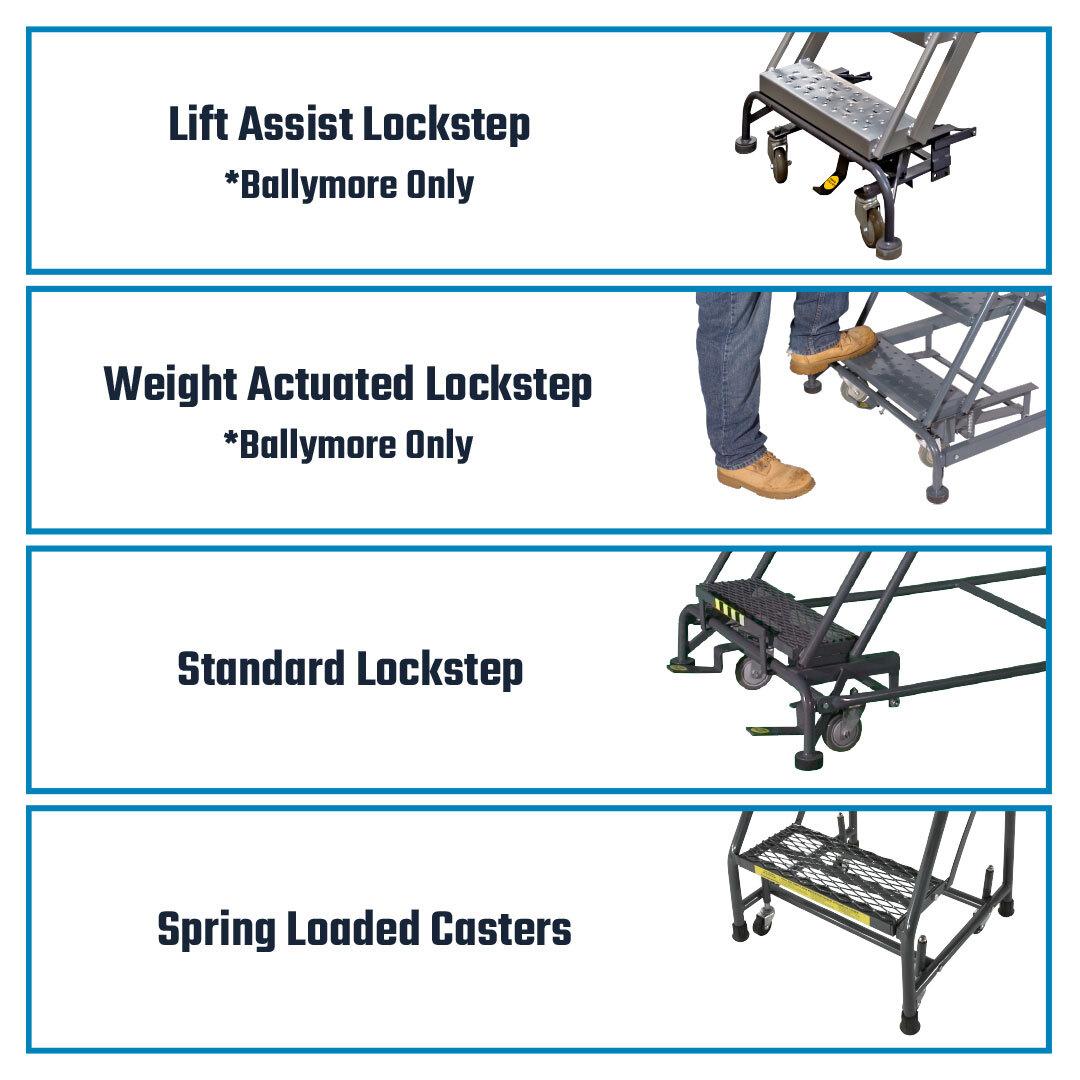
A lockstep is a braking mechanism that automatically engages when weight is applied to the bottom step. When engaged, the casters lock and the ladder becomes stationary. This eliminates the risk of the ladder rolling or shifting while a worker is climbing. Never climb a rolling ladder without confirming the lockstep is fully engaged, this is one of the most critical pre-use safety checks.
Rolling safety ladders are primarily designed for indoor use on smooth, level surfaces. Outdoor use on uneven ground, gravel, or wet surfaces is not recommended as it compromises caster and lockstep stability. For outdoor elevated access, Ballymore offers fixed and adjustable work platforms engineered for uneven surfaces. If you are unsure about the right solution for your environment, request a free evaluation from our safety team.
Weight capacity varies by model and material. Aluminum models are typically rated to 350 lbs. Hybrid models are rated to 450 lbs. Stainless steel models, built for washdown and corrosive environments, are rated to 450 lbs. Steel models range from 450 lbs up to 1,000 lbs for heavy-duty configurations. Always verify the capacity label on the ladder itself and ensure the combined weight of the worker, tools, and materials does not exceed the rated capacity.
Most workplace ladder falls are preventable with a few consistent practices: inspect the ladder before every use, maintain three points of contact while climbing, confirm the lockstep or locking mechanism is engaged before stepping on, never overreach or lean past the handrails, and keep the ladder on a stable, level surface. OSHA requires ladder-specific training before first use, and Ballymore's Certified Safety Professionals can help assess your facility's specific fall risks at no cost.
OSHA requires that employees who use ladders receive training before first use and whenever there is reason to believe they do not have the skills or understanding to use them safely. Best practice is to conduct annual refresher training for all ladder users, plus retraining after any ladder-related incident or near-miss.
How to Choose the Right Ladder
Work through all 7 steps to find the perfect fit for your application, environment, and safety requirements.
Not Sure Which Rolling Safety Ladder Is Right for Your Facility?
Our Certified Safety Professionals will evaluate your warehouse, distribution center, or industrial facility, identify your highest-risk tasks, and recommend the right rolling ladder at no cost to you.