










Benefits of Portable Loading Docks and How to Choose One
Portable loading docks give businesses a flexible way to load and unload freight when a permanent dock is unavailable, impractical, or not enough for daily demand. Our two powered portable loading docks, the PLD PLUS and the RT-PLD-5K, raise heavy loads to dock or truck bed height and drive to wherever the freight is. For companies managing changing freight volumes, seasonal operations, or multiple loading points, mobile loading docks make dock access more efficient without locking the operation into one fixed layout.
What are portable loading docks?
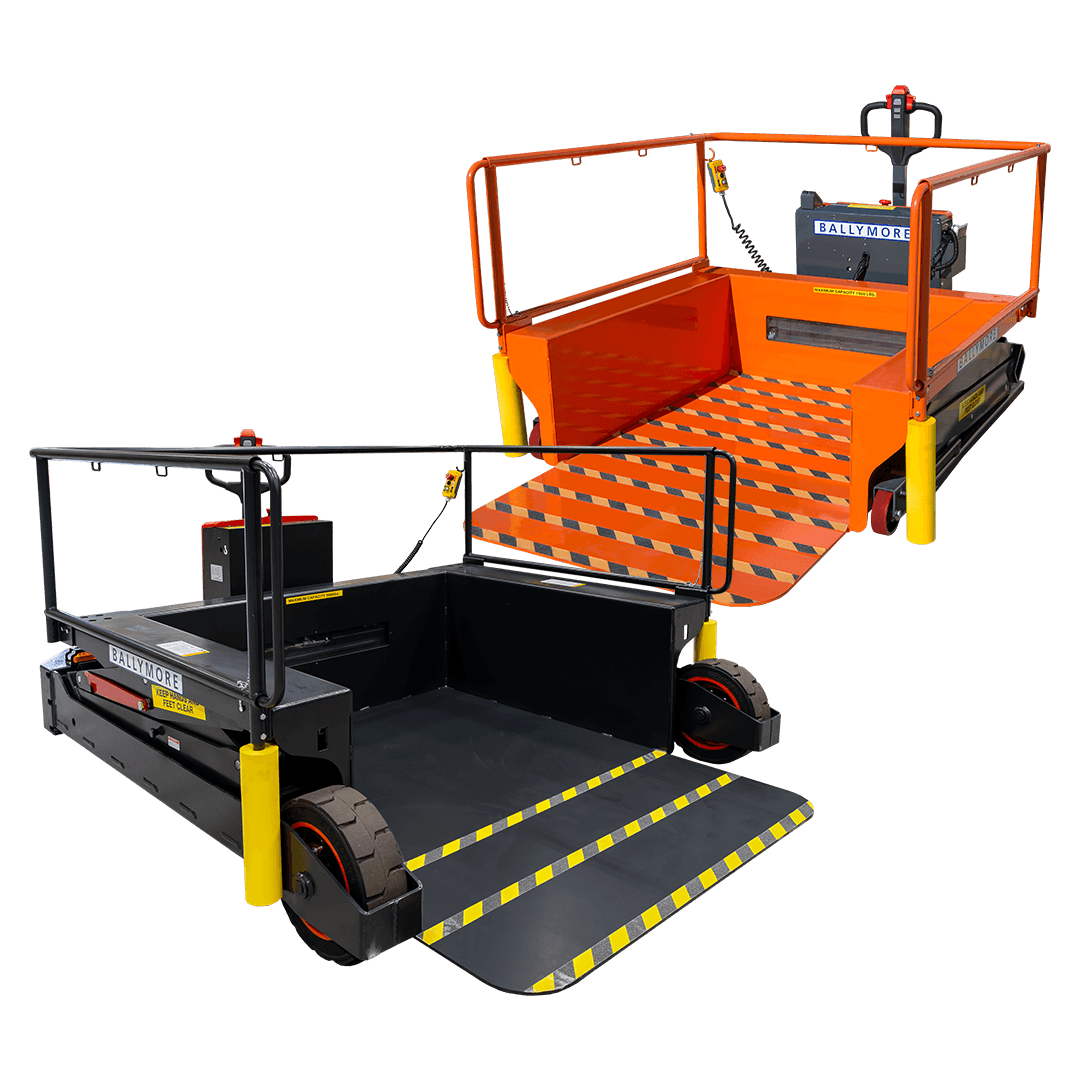
Portable loading docks are movable loading platforms designed to create a safe transition between ground level, a truck bed, and a facility's dock level. In simple terms, they provide dock-like access where a traditional built-in dock does not exist.
Unlike permanent loading dock systems, portable options are built around mobility and adaptability. They can be positioned where work is happening, then moved or stored when no longer needed. That makes them useful for warehouses, distribution centers, manufacturing plants, retail backrooms, outdoor yards, and overflow storage areas.
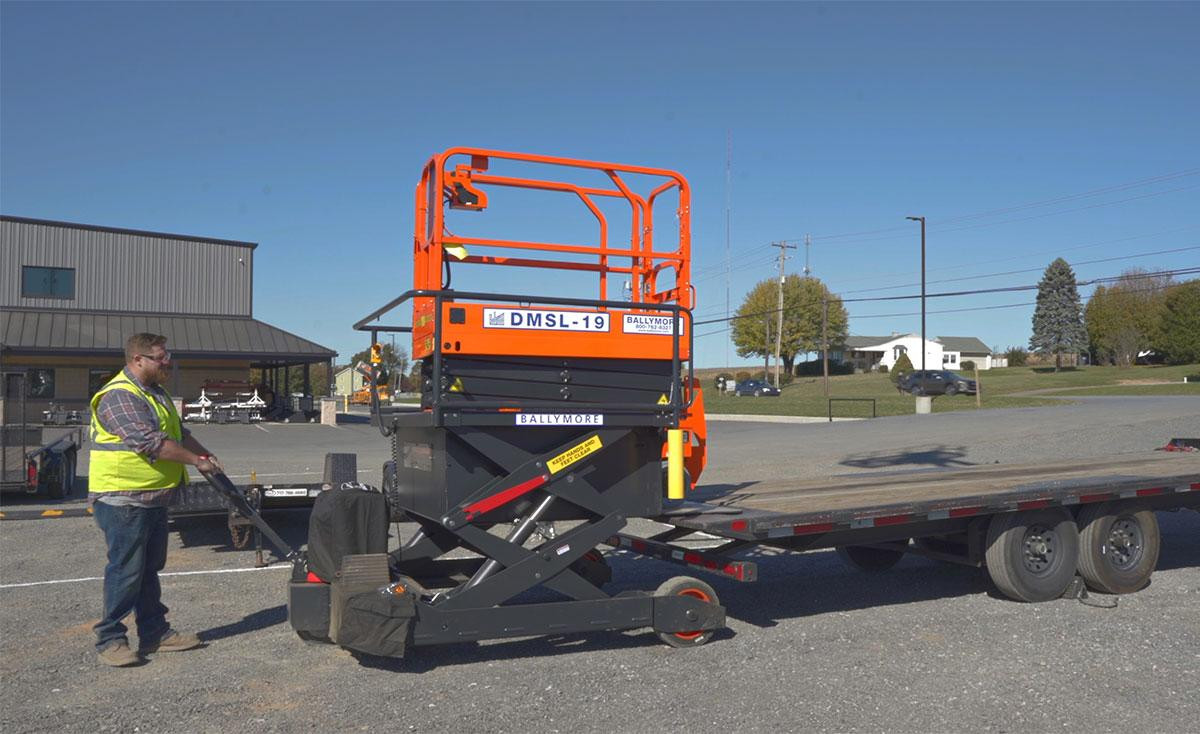
Both of our docks are fully powered and drivable. One all-in-one control handle steers the dock, drives it forward and in reverse, and raises and lowers the platform. That means heavy items get lifted by the dock instead of by hand, which reduces the manual handling behind many loading-related strain injuries.
Our two portable loading docks
| Specification | PLD PLUS | RT-PLD-5K Rough Terrain |
|---|---|---|
| Capacity | 1,500 lb. | 5,000 lb. |
| Platform size | 47" W x 75" L | 59" W x 75" L |
| Platform height | Ground level to 55" | Raises to 56" |
| Power | 24V drive motor, two 12V batteries, 110V charging | Maintenance-free 48V 85Ah battery, 110V charging |
| Overall size | 68" W x 105" L base, 44" lowered height, 98" raised height | 84" W x 104" L x 52" H |
| Weight | 2,178 lb. | 3,462 lb. |
| Best for | Everyday warehouse and facility loading up to 1,500 lb. | Rugged work sites and uneven surfaces, up to 5,000 lb. |
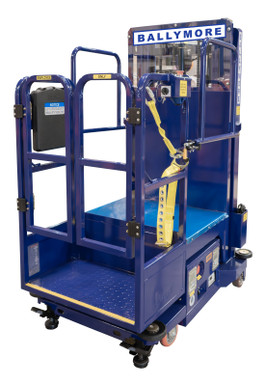
PLD PLUS. Our powered portable loading dock makes it easy to load or unload heavy objects to dock levels or pickup truck bed heights. The platform is drivable in forward or reverse, and the control handle handles steering and platform movement. Fold-down and extendable side rails adapt to different loads, and key control operation keeps the dock in the hands of authorized operators. Safety features include an emergency stop button, a battery power indicator, and a built-in cycle counter, all in a safety orange and yellow finish.
RT-PLD-5K. Our rough terrain portable loading dock is designed for efficiently lifting heavy products onto truck beds in rugged environments. Treaded solid tires provide stability and maneuverability on uneven surfaces, and the extra large platform and 5,000 lb. capacity handle heavier freight. It uses the same all-in-one control handle for driving, steering, and lifting, along with extendable side rails, an emergency stop button, a battery power indicator, and a built-in cycle counter.
How can you unload a truck without a loading dock?
You can unload a truck without a loading dock by using a powered portable loading dock that raises freight to truck bed height. Our PLD PLUS lowers to ground level, lifts up to 55 inches, and drives into position at the truck. Our RT-PLD-5K does the same job for heavier loads on uneven ground, raising to 56 inches.
Before you commit, confirm your truck bed height falls within the dock's range: up to 55 inches for the PLD PLUS or 56 inches for the RT-PLD-5K.
Flexible loading access without major facility changes
One of the clearest advantages of mobile loading docks is that they expand loading capacity without a major remodel. A facility may not have enough dock doors, may rely on ground-level entries, or may need to serve trucks in an outdoor yard. A portable loading dock brings the loading point closer to the freight.
This flexibility matters when operations change faster than the building can. A company may add product lines, take on temporary storage space, or see seasonal spikes in inbound and outbound shipments. Instead of forcing every load through one congested area, portable loading dock systems can create additional loading zones where they are needed most.
They also support businesses in leased spaces. If you do not own the building, installing permanent dock infrastructure may not be possible or cost-effective. A portable dock gives your team more control over workflow while keeping the facility footprint adaptable.
Key operational benefits at a glance
The right loading setup affects labor efficiency, safety, scheduling, and equipment use. Portable loading docks often deliver value in these practical ways:
- Improved workflow: Freight moves through a loading area with fewer bottlenecks, especially when trucks can be served in more than one location.
- Greater site flexibility: A dock can be positioned near temporary storage, production areas, or outdoor staging zones.
- Better use of existing space: You can create loading access without dedicating a permanent dock door to every situation.
- Support for changing demand: Seasonal surges and short-term contracts are easier to manage when loading capacity moves with the work.
- Reduced manual handling: Powered lifting reduces the need to carry, lift, or transfer materials by hand.
- Faster truck turnaround: Clearer access and fewer loading delays help drivers spend less time waiting at your site.
Loading and unloading are points where small delays quickly spread across the rest of the operation, so these gains show up in daily productivity.
How do mobile loading docks improve safety?
Mobile loading docks improve safety by creating a controlled path for moving goods between different heights and surfaces. Instead of relying on improvised methods, workers use equipment designed for loading transitions, which reduces awkward lifting, unstable movement, and unnecessary foot traffic around trucks.
Safety still depends on choosing the right dock and using it correctly. Capacity, surface conditions, edge protection, and compatibility with your carts and pallet jacks all matter. A dock used above its rated capacity, on unstable ground, or with unsuitable equipment can create risk, so clear procedures and training are essential.
Portable loading dock safety checklist
Before putting a portable loading dock into service, review these points:
- Confirm load capacity. Compare the total weight you will put on the platform, including the pallet or cart, against the dock's rated capacity: 1,500 lb. for the PLD PLUS or 5,000 lb. for the RT-PLD-5K.
- Check the surface. Even our rough terrain model should rest on stable ground that can support the dock and its load.
- Know the controls. Operators should know where the emergency stop button is and how the control handle works. On the PLD PLUS, keep the key with authorized operators.
- Use the side rails. Set the extendable side rails, and the fold-down rails on the PLD PLUS, for the load you are moving.
- Inspect traction areas. Wet, oily, icy, or damaged surfaces affect movement and braking.
- Control traffic. Keep pedestrians away from active loading paths and communicate clearly with drivers.
- Check your equipment. Make sure the carts, pallet jacks, or hand trucks you plan to use work safely with the platform.
A short checklist prevents many avoidable problems and gives supervisors a repeatable way to confirm the loading area is ready before work begins.
Portable loading dock vs. forklift for unloading trucks
A forklift lifts and carries heavy pallets across a site. A portable loading dock is built to solve a different problem: bridging the height gap between the ground and a truck bed or dock. Many facilities use both, but the right choice depends on the job.
Choose a portable loading dock when:
- You have no dock door, or your dock doors are fully booked.
- Your loads fall within the dock's capacity (1,500 lb. or 5,000 lb.).
- You want to reduce manual lifting and the strain that comes with it.
- You need a loading point that can move to where the freight is.
A forklift is still the better tool when:
- Loads regularly exceed 5,000 lb.
- You need to lift and stack to rack heights.
- You are moving pallets over long distances across the site.
A practical alternative to permanent expansion
Permanent loading dock construction can be useful, but it is rarely the right first step. It may require planning, permits, construction downtime, building modifications, and a long-term commitment to one facility layout. Portable loading docks offer a different path: add capability where it is needed while preserving future flexibility.
That does not mean portable systems replace every fixed dock. In many facilities they work alongside existing infrastructure. A permanent dock may handle standard daily freight, while a portable dock supports overflow, special deliveries, and outdoor staging. For growing businesses, this blended approach avoids overbuilding for occasional peak demand.
Common use cases across industries
Portable docks are useful because freight movement rarely happens in one perfect location. Common applications include:
- Warehouses and distribution centers that need overflow loading capacity during busy periods.
- Manufacturing facilities that receive materials in different parts of the site.
- Retail and e-commerce operations that manage seasonal surges or temporary storage.
- Challenging work sites and staging areas with uneven ground, where the RT-PLD-5K is the better fit.
- Third-party logistics providers that need adaptable layouts for different clients and shipment types.
In each case, the benefit comes from bringing loading access closer to the work, which reduces congestion and limits unnecessary handling.
What should you consider before choosing a portable loading dock?
Consider your freight weight, truck bed heights, available space, surface conditions, and how often the dock will be used. The best option is not simply the largest model, it is the one that fits the real movement of goods through your site.
A quick way to narrow it down:
- Everyday warehouse or facility loading, with loads up to 1,500 lb.: the PLD PLUS is built for this.
- Uneven ground, rugged work sites, or loads up to 5,000 lb.: the RT-PLD-5K is built for this.
Then work through this selection checklist:
- What vehicles will you serve most often, and what are their bed heights?
- Does the bed height fall within the dock's platform range?
- What is the combined weight of the load and the cart or pallet jack?
- How much space is available for approach, turning, and staging?
- Will the dock move daily, weekly, or only occasionally?
- Is the work area indoors, outdoors, paved, gravel, or mixed?
- Are there weather, drainage, lighting, or visibility concerns?
- Who will inspect, position, charge, and maintain the dock?
These questions keep the decision grounded in actual operations and help you avoid a system that looks capable on paper but does not fit the site.
Maintenance and training keep performance reliable
Like any loading dock system, portable docks need routine care. Regular inspection helps catch worn surfaces, damaged rails, loose components, battery or charging problems, and wear on wheels or tires before they interrupt loading schedules. The built-in cycle counter on both of our docks can help you log usage and plan inspections.
Training is just as important. Workers should understand how to position the dock, center loads, control traffic, and when to take the equipment out of service. If multiple shifts share a dock, consistent procedures keep one team from inheriting a problem created earlier in the day.
Documentation can be simple: a pre-use inspection form, a maintenance log, and basic operating guidelines are enough for many operations. The goal is to make safe use part of the workflow.
Portable loading docks support smarter operations
Portable loading docks are strategic tools for companies that need adaptable freight handling, better use of space, and smoother loading access across changing work environments. When selected carefully, they support safer movement, reduce congestion, and give teams more control over the loading process.
Whether you need a drivable dock for a busy warehouse or a rough terrain portable loading dock for a challenging work site, our PLD PLUS and RT-PLD-5K add loading capability without committing every solution to permanent construction. Match the dock to the work, train your people well, and treat portable systems as an integrated part of the operation.
Ready to add loading capacity? Browse our portable loading docks, request a quote, or call 1-800-762-8327.