










How to Choose a Lift Table | Lift Products
How to Choose a Lift Table: A Complete Guide
Choosing the right lift table starts with more than determining how much weight it needs to lift. The right lift table should match the load, required working height, loading method, operator's tasks, and conditions of the work area.
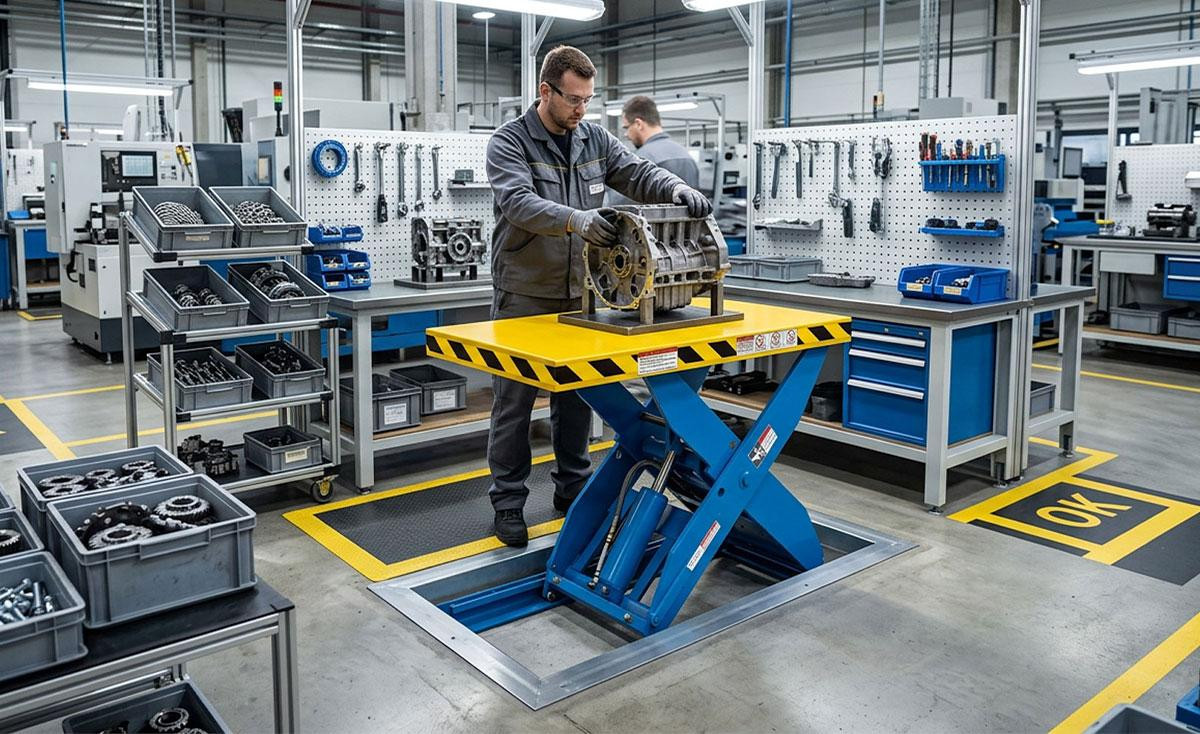
Lift tables raise and position materials at a more practical working height, helping reduce unnecessary bending, reaching, and lifting. The right configuration can also improve workflow and make repetitive material handling tasks more consistent.
So, how do you choose a lift table? Start with the application. Determine the total load, platform size, required height range, loading method, cycle frequency, workspace, environment, controls, and available power. Then select the lift table type and options that fit those requirements.
What Should You Consider When Choosing a Lift Table?
Before comparing models, identify the characteristics of the load, the operator's tasks, and the work area.
| Lift Table Specification | What to Determine | Why It Matters |
|---|---|---|
| Capacity | Maximum total weight, including pallets, containers, fixtures, or tooling | The table must be properly rated for the actual load and how that load is distributed. |
| Platform Size | Length and width of the load and required support | The platform should support the load without unnecessary overhang or excessive operator reach. |
| Lift Height | Lowered height, raised height, and preferred working height | The correct height positions materials where operators can work more comfortably. |
| Loading Method | Forklift, conveyor, pallet truck, cart, crane, or manual loading | The loading method can determine which lift table configuration is appropriate. |
| Ergonomics | Reach distance, bending, lifting, rotation, and frequency of handling | The right configuration can position materials closer to a comfortable working zone. |
| Duty Cycle | Number of lifts or cycles per hour and shift | Higher-use applications may require components designed for more frequent cycling. |
| Environment | Washdown, moisture, chemicals, dust, temperature, and other conditions | Environmental conditions can affect materials and component selection. |
1. Determine the Lift Table Capacity You Need
Capacity is one of the first specifications to determine, but it should not be the only one.
Start with the maximum total load the lift table will need to raise. Include the material being handled as well as the pallet, container, fixture, tooling, or other carrier placed on the platform.
The load also needs to be considered in terms of how its weight is distributed. A centered and evenly distributed load behaves differently from an offset load, a long load, or a load that changes its center of gravity as material is removed.
Questions to Ask About Capacity
- What is the heaviest total load the table will lift?
- Does the total weight include the pallet, container, fixture, or tooling?
- Is the load centered or offset?
- Will the load change as material is removed?
- How frequently will the table cycle?
Capacity should be selected based on the actual application rather than the average load. For unusual, offset, or high-cycle applications, an application-specific review may be appropriate.
2. Choose the Right Platform Size
Platform size affects both load stability and operator ergonomics.
The platform should provide adequate support for the load without being unnecessarily oversized. A platform that is too small may not adequately support the load, while one that is significantly larger can increase the distance an operator needs to reach.
Measure the complete footprint of the load before selecting the platform. Consider pallet dimensions, container dimensions, load overhang, and how the worker will access the material.
3. Determine the Required Lift Height
The correct lift height should be based on where the work needs to happen, not simply how high the table can go.
For many material handling applications, the goal is to position material close to waist level and within a comfortable reach zone. Lift Products' buyer's guide recommends considering both the highest and lowest placement of individual products when determining the required lift height.
The lowered height determines how the table is loaded, while the raised height determines where the material is positioned for the operator.
When selecting a lift table, determine:
- How low the platform needs to be for loading
- How high the platform needs to rise
- Where the operator should work most comfortably
- Whether the working height changes as material is removed
- Whether the table needs to interface with another piece of equipment
4. Consider How the Lift Table Will Be Loaded
Loading method is one of the most important factors in choosing the right lift table.
A table loaded by forklift or conveyor may require a different configuration than one that needs to accept a pallet truck or other floor-level loading equipment.
| Loading Method | Potential Configuration | Key Consideration |
|---|---|---|
| Forklift | Standard lift table | Confirm platform dimensions and surrounding equipment clearance. |
| Conveyor | Standard or application-specific table | Coordinate platform height, travel, and conveyor interface. |
| Pallet Truck | Ground-entry or pit-mounted table | The table must provide appropriate floor-level access. |
| Manual Loading | Low-profile, mobile, or application-specific table | Consider lowered height and the distance workers must carry material. |
If floor-level pallet loading is required, a standard lift table may not provide the necessary access. Ground-entry and pit-mounted lift tables are designed for applications where floor-level access is required.
5. Which Lift Table Type Is Right for Your Application?
Lift Products offers several lift table configurations because material handling applications vary. The right type depends on how the load is handled, how the operator interacts with it, available space, and whether the equipment needs to move.
| Lift Table Type | Best Suited For |
|---|---|
| Standard | General material positioning, assembly, packaging, palletizing, and machine feeding. |
| Low Profile | Applications where the platform needs to start close to floor level. |
| Ground Entry | Floor-level loading where a pallet truck or similar equipment needs access. |
| Pit Mounted | Applications requiring a low or flush platform position within the floor. |
| Mobile | Material handling applications where the table needs to move between work areas. |
| Rotating | Palletizing, depalletizing, assembly, and applications where workers need access to multiple sides of a load. |
| Tilting | Bins, totes, baskets, and containers where tilting the load can improve access and reach. |
| Stainless Steel | Washdown, food processing, corrosive, and other environments requiring specialized construction. |
| High Capacity | Heavy industrial loads requiring greater capacity and heavier-duty construction. |
| Custom | Applications with unusual dimensions, loads, heights, environments, or other requirements. |
6. Design the Lift Table Around the Operator
Ergonomics should be a primary consideration when a lift table will be used for repetitive material handling.
The goal is to position materials where workers can interact with them comfortably and consistently. Consider how often employees handle the material, how far they need to reach, and whether they must bend, twist, or stretch to complete the task.
A large load may be within the table's capacity but still create an ergonomic problem if workers have to repeatedly reach across it. Rotating and tilting configurations can help bring material closer to the operator in applications where they are appropriate.
Lift table placement also matters. Keeping material close to the point where it is used can reduce unnecessary carrying and movement between work areas.
7. Consider the Work Environment
The environment where a lift table operates can determine which materials and components are appropriate.
Before choosing a lift table, consider whether the equipment will be exposed to:
- Water or washdown procedures
- Food processing conditions
- Corrosive materials
- Dust or debris
- Extreme temperatures
- Frequent cleaning
- Other industry-specific environmental requirements
Specialized applications may require stainless steel construction, special bearings, sealed components, or other application-specific features. Environmental conditions should be part of the specification from the beginning.
8. Review Controls, Power, and Duty Cycle
Controls should be positioned where the operator can use them naturally without creating unnecessary trip hazards or awkward posture. Depending on the application, lift tables can be configured with options such as pedestal controls, foot controls, and handheld control boxes.
Power requirements should also be determined before ordering. Lift Products offers electro-hydraulic configurations using different single-phase and three-phase electrical supplies depending on the equipment and application.
Duty cycle is another important consideration. A table used occasionally has different requirements than equipment that raises and lowers materials repeatedly throughout a shift. Higher-cycle applications can place greater demands on motors, hydraulic components, rollers, bearings, and other wear components.
9. Consider Construction and Maintenance
Construction becomes increasingly important as load weight and cycle frequency increase.
When comparing industrial lift tables, look at:
- Scissor arm construction
- Frame and platform strength
- Cam rollers
- Pivot pins and bearings
- Motor and hydraulic components
- Maintenance access
- Grease fittings and service points
- Applicable industry standards
Lift Products identifies fabricated scissor arms, all-welded construction, and ANSI MH29.1 as factors to consider when evaluating industrial-grade lift tables.
Maintenance should also be part of the purchasing decision. Accessible grease fittings, serviceable components, and accessible power units can make inspection and routine service easier over the life of the equipment.
How to Choose a Lift Table: Step-by-Step
Use this process to move from a general material handling need to a lift table specification:
| Step | What to Determine |
|---|---|
| 1. Define the Load | Total weight, dimensions, center of gravity, pallet or container type, and individual item weight. |
| 2. Define the Task | How operators load, unload, retrieve, place, assemble, package, or otherwise interact with the material. |
| 3. Set Height Requirements | Lowered height, raised height, vertical travel, and preferred ergonomic working height. |
| 4. Identify Loading Method | Forklift, conveyor, pallet truck, cart, crane, or manual loading. |
| 5. Select the Table Type | Standard, mobile, rotating, low-profile, stainless, high-capacity, ground-entry, tilting, or custom. |
| 6. Review the Workspace | Aisles, surrounding equipment, operator position, controls, maintenance access, and available floor space. |
| 7. Confirm Power and Duty Cycle | Electrical supply, motor requirements, control location, and expected frequency of use. |
| 8. Review Construction | Scissor arms, rollers, bearings, hydraulic components, serviceability, and applicable standards. |
Common Lift Table Selection Mistakes to Avoid
Many lift table problems can be prevented before the equipment is purchased. Avoid these common mistakes:
- Choosing by capacity alone: Weight rating does not guarantee the right height, access, stability, or ergonomics.
- Ignoring reach: A large platform or load can force repetitive stretching if material cannot be brought within a comfortable reach zone.
- Forgetting the loading method: Pallet truck loading, forklift loading, and conveyor loading may require different configurations.
- Overlooking lowered height: If the table cannot get low enough, loading may become difficult or impossible.
- Underestimating duty cycle: High-frequency use requires greater attention to motors, hydraulics, and wear components.
- Missing environmental requirements: Water, chemicals, sanitation, dust, and temperature can change material and component requirements.
- Skipping maintenance considerations: A table that is difficult to inspect or service can cost more over time.
What Is the Best Lift Table for Your Application?
There is no single lift table that is best for every application. The right choice depends on the load, platform size, working height, loading method, operator interaction, cycle frequency, environment, available space, power supply, and maintenance requirements.
A standard scissor lift table may be the right choice for straightforward material positioning. Floor-level pallet loading may require a ground-entry or pit-mounted design. Repetitive parts handling may benefit from a rotating or tilting configuration, while demanding industrial applications may require a high-capacity or custom lift table.
The best lift table is the one that fits the actual job.
Frequently Asked Questions About Lift Tables
How do I choose the right lift table?
Choose a lift table based on total load weight, platform size, required lift height, loading method, operator ergonomics, cycle frequency, work environment, controls, power supply, and available space. Capacity is important, but it should not be the only factor.
What lift table capacity do I need?
Determine the maximum total weight the table will lift, including the material, pallet, container, fixture, tooling, and other items placed on the platform. Also consider how the load is distributed and whether its center of gravity changes during the work process.
What size lift table do I need?
The correct platform size depends on the load footprint and operator access requirements. The platform should adequately support the load without creating unnecessary overhang or excessive reach.
What is the difference between a standard and ground-entry lift table?
A standard lift table is commonly loaded by equipment such as a forklift, conveyor, stacker, or crane. A ground-entry lift table provides floor-level access for applications where a pallet truck or similar equipment needs to enter the platform area.
When should I use a rotating lift table?
A rotating lift table can be useful when workers need access to multiple sides of a load. Rotating the material can reduce the need to walk around a pallet or reach across it and may be beneficial for palletizing, depalletizing, assembly, and parts handling.
What is a tilting lift table used for?
A tilting lift table angles the load toward the operator. This can improve access to parts inside bins, totes, baskets, and other containers by bringing material closer to the operator's working zone.
Are lift tables good for ergonomics?
Lift tables can help position materials at a more practical working height, reducing unnecessary bending, lifting, and reaching. The greatest ergonomic benefit comes from selecting a configuration based on the actual operator, load, working height, reach distance, and frequency of handling.
Can lift tables be customized?
Yes. Custom lift tables can be considered when an application requires dimensions, capacity, travel, loading access, controls, materials, or other specifications outside standard configurations.
Choose the Lift Table Around the Job
The right lift table starts with the application. Define the load, determine how the material will be loaded and handled, establish the required height range, evaluate operator reach and repetition, and then select the lift table type and options that fit the work environment.
When those factors are considered together, it becomes easier to select equipment that supports the operator, fits the workflow, and performs reliably for the intended application.
Need help selecting a lift table? Contact Lift Products to discuss your application and determine the appropriate lift table configuration.